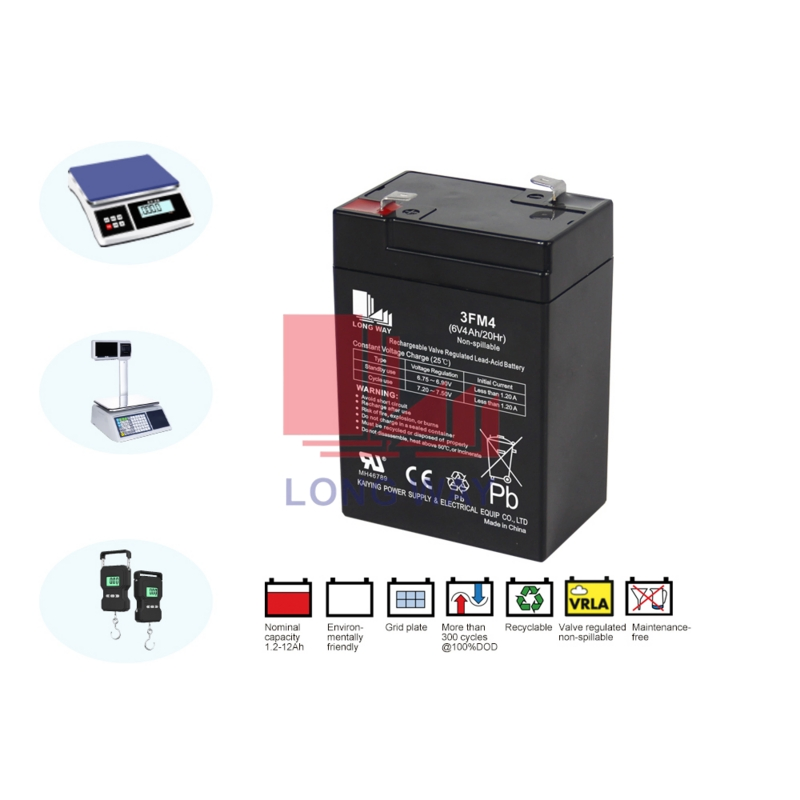
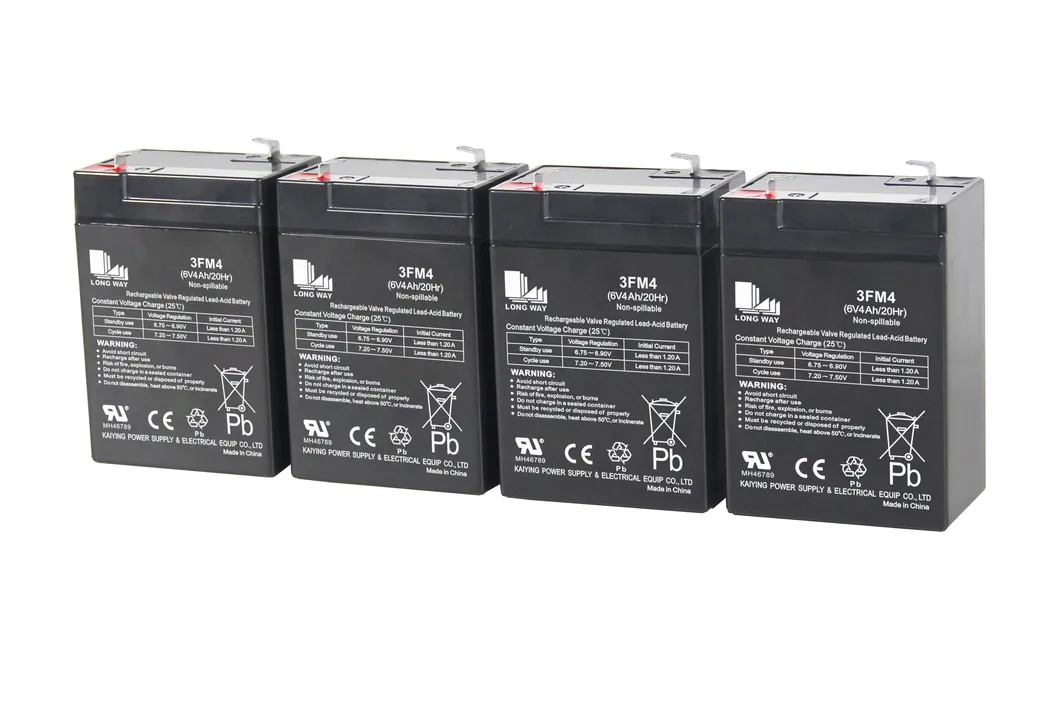
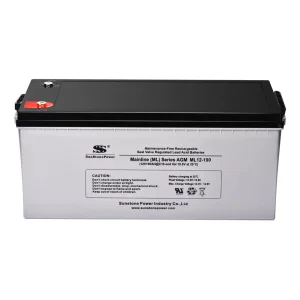
• Multi-angle Use: Can be used in any direction (side, horizontal, upside down) for 48 hours without leakage.
• Deep Discharge Design: Residual capacity remains ≥ 50% after 96 cycles of 100hr full capacity life.
• Superior Storage: Remains functional after 2 years of full storage or 120 days at 50% SOC.
• Fast Recovery: Recovers to over 95% capacity after being discharged to 0V and short-circuited for 3 days.
• Standards: Fully compliant with RoHS and REACH EU Battery Directives.
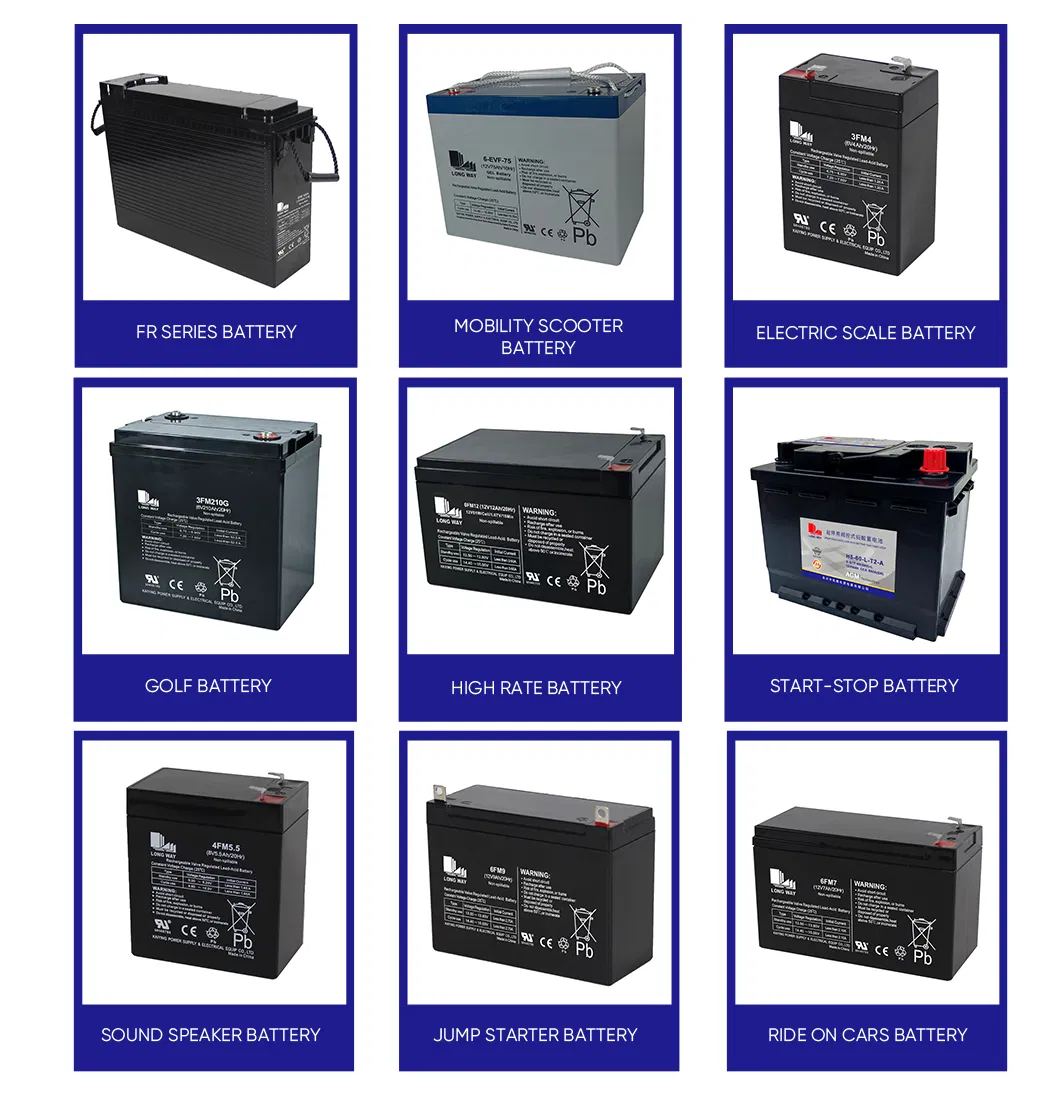
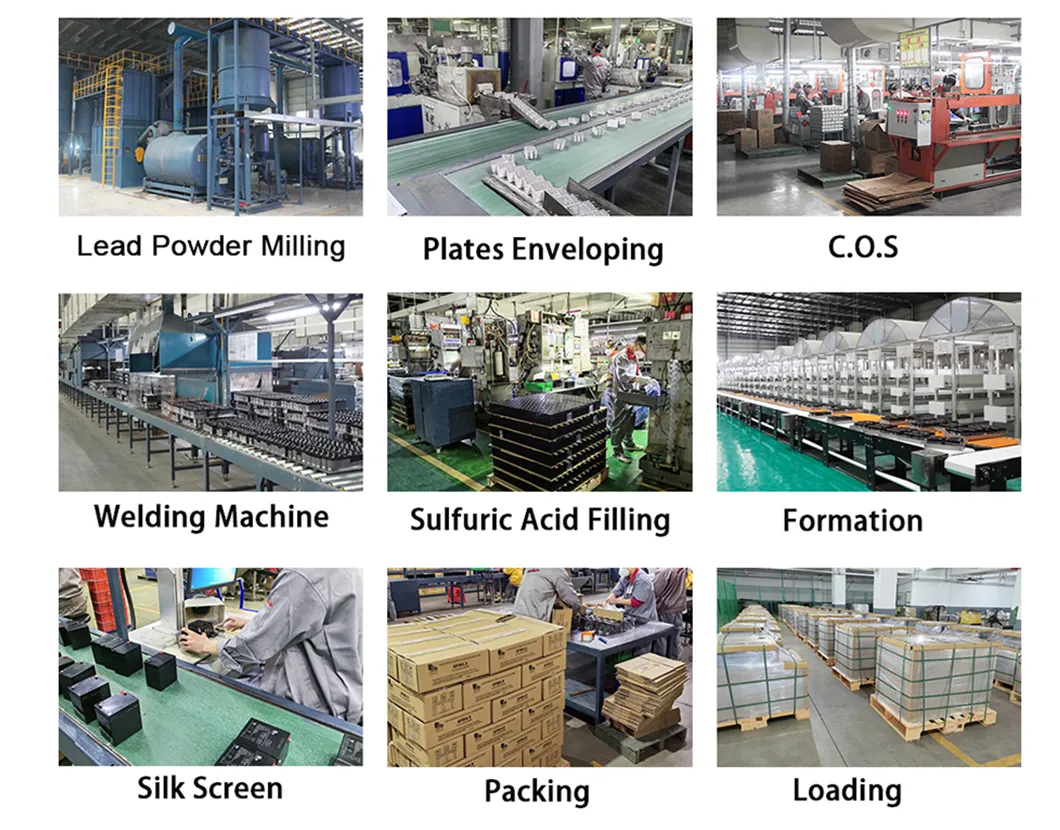
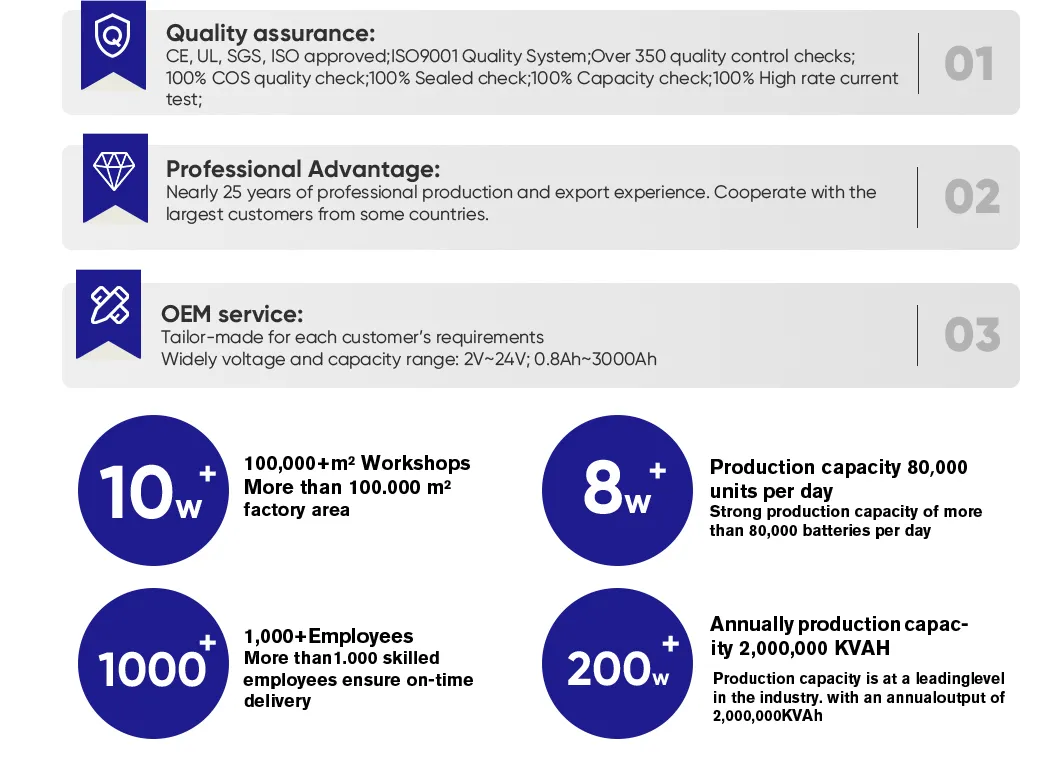
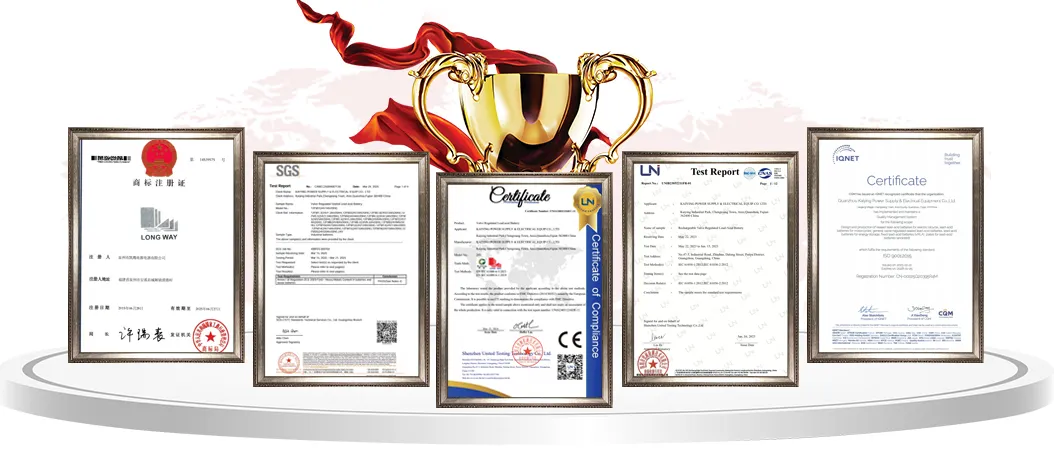
Established in 2000, the company operates two major production plants covering over 100,000 m². With over 1000 employees and an annual capacity of 2 million KVAH, we specialize in high-quality AGM and GEL batteries. Our technical performance exceeds international standards including IEC, BS, JIS, CE, UL, and GB. Our products range from 2V to 24V (0.8Ah to 3000Ah) and are widely used in UPS, Power systems, Electric tools, and Toy cars globally.
What is a Valve-Regulated Sealed Lead-Acid Battery (VRLA)?
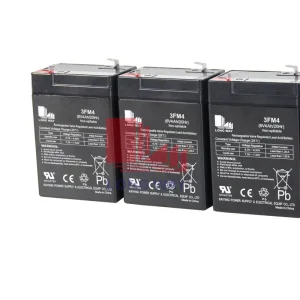
A VRLA battery is a sealed lead-acid battery using internal oxygen recombination technology for maintenance-free operation. It includes a safety valve to prevent pressure buildup. Types include AGM and Gel.
How is VRLA different from conventional flooded batteries?
VRLA batteries are sealed and maintenance-free, requiring no water refilling. They allow for flexible installation directions and minimize gas emissions through oxygen recombination.
Does a VRLA battery require an initial charge?
They come pre-charged. however, if stored for more than 6 months, a supplementary charge is recommended using constant voltage charging.
What is the correct charging voltage for a 12V battery?
For cycle use, it is 14.4-14.8V; for float charge, it is 13.6-13.8V. Always follow specific manufacturer guidelines to avoid water loss.
How to determine if a battery is at its end-of-life?
Replace if capacity falls below 60% of the rated value, or if voltage drops rapidly (below 12.0V for a 12V unit) after a full charge.
How should I store an unused VRLA battery?
The battery should be fully charged before being placed into storage to maintain its health and service life.
 SK Battery