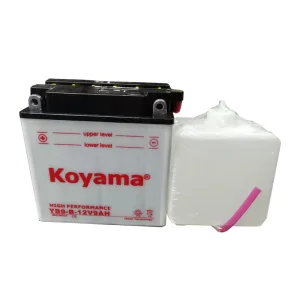
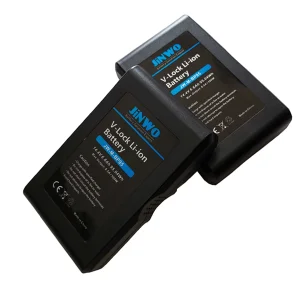
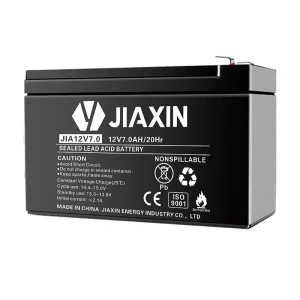
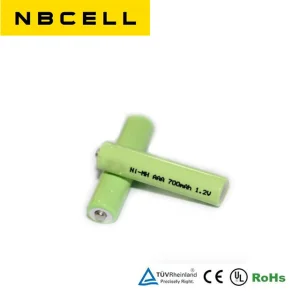
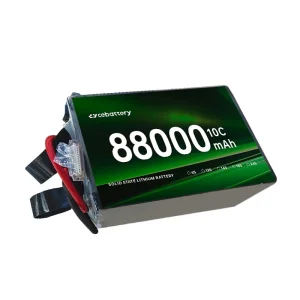
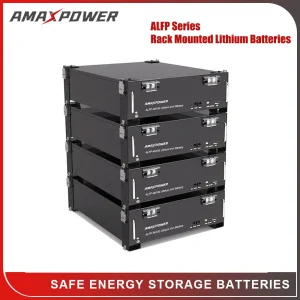
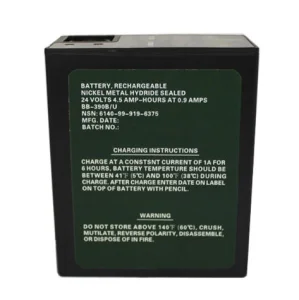
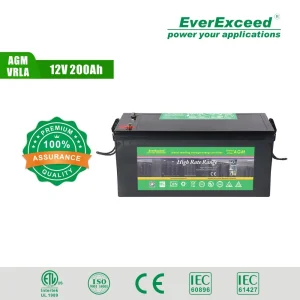
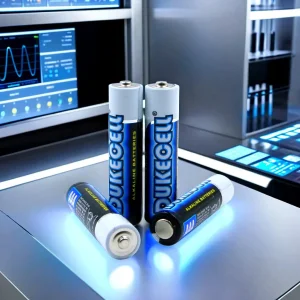
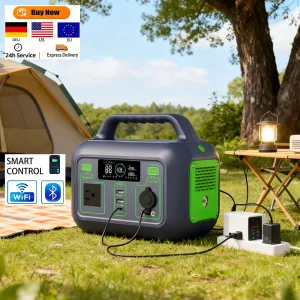
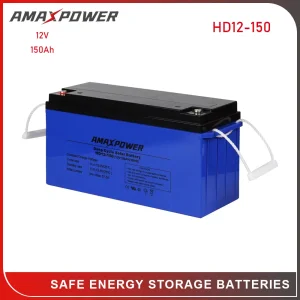
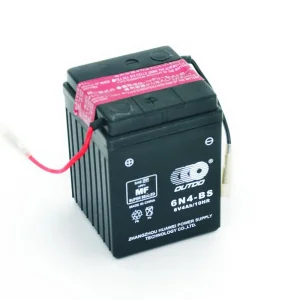
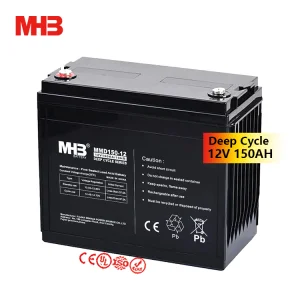
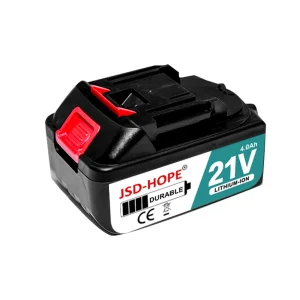
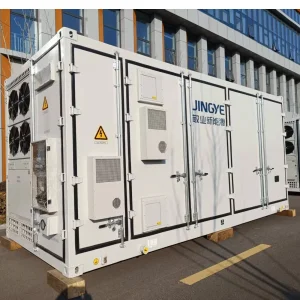
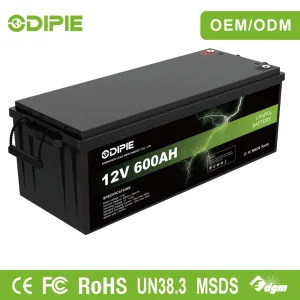
High-performance industrial, marine, communication, and custom-configured battery products built with standard-setting quality assurance
In the contemporary landscape of industrial design and micro-electrochemical systems, the paradigm shift toward structural and conformable electronics demands a fundamental reinvention of energy storage mechanics. Traditional lithium-ion cells rely on rigid, planar geometries sealed inside metallic canisters or laminated pouch casings. These configurations fail when subjected to mechanical strains like bending, twisting, or stretching. OEM/ODM flexible batteries circumvent these mechanical constraints through advanced solid-state architecture, polymer-embedded active matrices, and highly conductive current collectors engineered to sustain thousands of bending cycles without material fracture or degradation.
As a leading innovator, Fujian SK Battery Co., Ltd. spearheads this transformation. We leverage state-of-the-art materials science to engineer batteries that conform organically to non-planar surfaces. Our customizable cells integrate seamlessly into ergonomic consumer form factors, industrial sensor systems, and biomedical implants, providing sustained power delivery with absolute structural integrity. By eliminating rigid casing requirements, we enable designers to maximize internal space, reduce weight, and achieve unparalleled design freedom.
“True mechanical flexibility in electrochemical cells is not merely about using thin materials; it requires resolving the shear stresses between the anode, cathode, and separator layers during dynamic flexing to prevent interior short circuits and catastrophic thermal failure.”
Achieving stable chemical kinetics under structural deformation requires replacing traditional liquid electrolytes and metallic foils with advanced materials. The engineering of flexible cells is governed by three primary structural pathways:
Our GPE formulation embeds liquid plasticizers containing dissolved lithium salts (such as LiPF6) inside a crosslinked polymer network (e.g., PVDF-HFP or PMMA). This hybrid architecture provides high ionic conductivity comparable to liquid systems while maintaining solid-state leak-proof safety during bending cycles.
Traditional copper and aluminum foils develop micro-cracks under repeated tensile strain. Fujian SK Battery replaces or reinforces these current collectors using carbon nanotube (CNT) networks and graphene-coated polymer films. These conductive networks preserve low electrical resistance even at extreme bend angles.
For applications demanding maximum thermal stability and cycle life, our solid-state thin-film cells utilize inorganic lithium phosphorus oxynitride (LiPON) electrolytes. These systems feature sub-millimeter profiles and are intrinsically safe from leakage, dendrite growth, or combustion.
For procurement managers and hardware design engineers, selecting a flexible battery supplier requires evaluating rigorous performance data. At Fujian SK Battery Co., Ltd., our OEM/ODM custom designs are measured against stringent benchmarks to ensure long-term mechanical and electrochemical reliability. The table below represents the operating envelopes achieved across our flexible product line:
| Performance Indicator | Standard Gel Polymer Range | Solid-State Thin-Film Range | Testing Methodology (IEC/ISO) |
|---|---|---|---|
| Minimum Bending Radius | 15 mm to 25 mm | 5 mm to 10 mm | ISO 1519 Mandrel Bend Test |
| Cyclic Bending Durability | > 5,000 cycles (90% capacity retention) | > 10,000 cycles (95% capacity retention) | Dynamic flexing test under 1C charge/discharge |
| Thickness Profile | 0.8 mm to 2.0 mm | 0.4 mm to 0.7 mm | Micrometer caliper validation |
| Volumetric Energy Density | 320 to 450 Wh/L | 200 to 300 Wh/L | Electrochemical impedance spectroscopy (EIS) |
| Temperature Tolerance | -20°C to +60°C | -40°C to +85°C | Thermal chamber cyclic evaluation |
| Tensile Elongation Limit | Up to 15% elasticity | Up to 30% (specialist elastomeric matrix) | ASTM D638 tensile pull profile |
The applications for flexible batteries span consumer, commercial, and industrial markets. Through localized OEM services, Fujian SK Battery customizes safety configurations, capacity, and dimensions to meet regional standards and niche application demands worldwide:
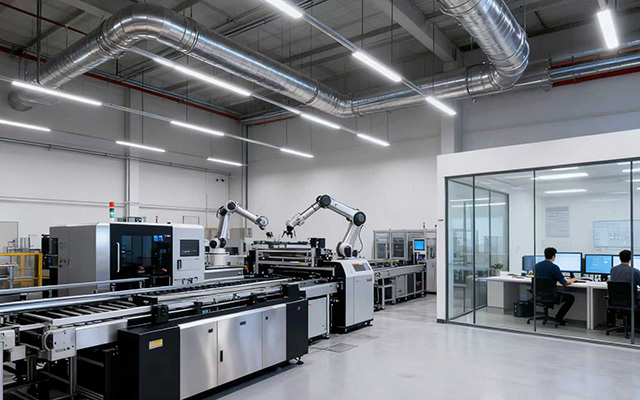
Our comprehensive manufacturing facility supports a diverse range of chemistries including Ni-Cd, Ni-MH, and advanced Lithium systems.
Established in 2021, Fujian SK Battery Co., Ltd. is located in Fujian, the epicentre of China's new energy industry. This geographical position offers distinct advantages for our global OEM and ODM partners:
Fujian SK Battery's R&D department continuously refines the mechanical limits of flexible batteries. Over the next five years, our product development roadmap is focused on three primary frontiers:
Integrating wavy, island-bridge electrode designs into elastic substrates (such as PDMS or polyurethane) will allow batteries to stretch up to 50% along multiple axes, perfect for compression sportswear and biometric band configurations.
To mitigate lithium cost volatility, we are adapting sodium-ion chemistry for flexible form factors. Utilizing cost-efficient sodium-based active matrices provides an eco-friendly option for high-volume, single-use medical or shipping applications.
Our upcoming generation of solid-state polymers will feature hydrogen-bonding matrices that can repair micro-fractures in-situ during bending. This self-healing process will effectively extend battery cycle life to over 20,000 flexing cycles.
At Fujian SK Battery Co., Ltd., we provide a structured, end-to-end customization pathway for global hardware developers. Each flexible cell undergoes comprehensive mechanical and electrochemical validation to guarantee reliable performance in real-world environments:
Answers to key engineering and procurement questions regarding flexible battery safety, design integration, and bulk manufacturing
Q1: How do flexible batteries handle repetitive bending without experiencing thermal runaway?
Flexible batteries prevent thermal runaway by using highly stable solid-state or gel polymer electrolytes in place of volatile liquid chemistry. In our cells, the electrodes are formulated with elastomeric binders and conductive carbon networks. This structure allows the layers to bend without cracking or short-circuiting. Even if the cell is punctured, the solid polymer design prevents rapid short circuits and chemical leaks.
Q2: Can Fujian SK Battery customize the shape, thickness, and capacity of flexible batteries?
Yes. Our OEM/ODM service is designed for complete customization. We manufacture thin-film and gel-polymer batteries with profiles as thin as 0.4mm. These can be shaped into custom curves, rings, or asymmetrical designs to fit specific device housings. Our engineering team assists with electrode layouts to maximize energy density within your physical boundaries.
Q3: What certifications do your flexible batteries carry for international markets?
All our custom and standard cells are designed and manufactured to comply with global import regulations. We provide test certifications including UN38.3 (for safe air and sea shipping), UL2054, IEC 62133 (for international electronics markets), CE, and RoHS compliance. Our Quality Management System (QMS) ensures tracing and consistency across production lots.
Q4: How does your geographic location in Fujian improve delivery efficiency for global clients?
Fujian is a primary hub of China's new energy supply chain. This location grants us direct access to essential raw materials and specialized sub-component suppliers, reducing lead times. Additionally, nearby deep-water ports and international air logistics centers allow for fast, cost-effective shipping to key markets in Europe, North America, and across Asia.
Explore our broader selection of high-durability AGM, Gel, LiFePO4, Ni-MH, and low-temperature batteries built for demanding applications
 SK Battery