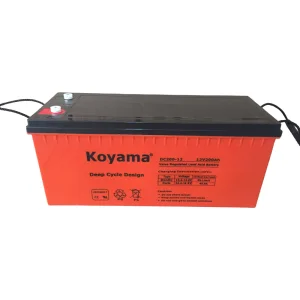
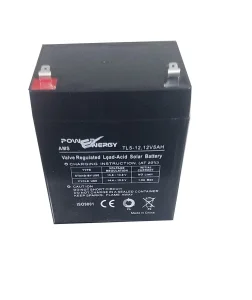
Despite the rapid penetration of lithium-ion alternatives, Deep Cycle Lead-Acid batteries remain the bedrock of the global backup power and energy storage architecture. Characterized by thick active material plates, high-density oxide formulations, and robust grid alloys, these batteries are uniquely engineered to endure repeated deep discharges of up to 80% Depth of Discharge (DoD) without rapid active material shed or premature capacity decay.
Historically, standard starter batteries relied on thin, high-surface-area grid designs to maximize short-term cranking currents (CCA). Conversely, true deep cycle engineering focuses on structural integrity and slow-release electrochemical stability. Modern formulations integrate specialized carbon additives into the negative plate (lead-carbon variants) to mitigate partial state-of-charge (PSoC) sulfation, which is the primary failure mode of batteries operating in hybrid solar microgrids.
Integrating carbon nanoparticles into negative active mass accelerates recharge acceptance rates and resolves standard sulfation issues during incomplete charging cycles.
Using 99.99% pure primary lead enables thinner grids with lower internal resistance and exceptional performance in extreme temperatures.
With a recycling efficiency rate exceeding 99% globally, lead-acid batteries represent a highly sustainable, closed-loop industrial process compared to early-stage lithium recycling.
Industrial procurement teams must move beyond initial acquisition costs (CAPEX) to evaluate the Total Cost of Ownership (TCO). In remote telecom hubs and critical marine infrastructure, early battery failure results in severe operational losses. For high-volume global buyers, evaluation of potential suppliers must be grounded in verified engineering parameters, international standards compliance, and raw material supply chain depth.
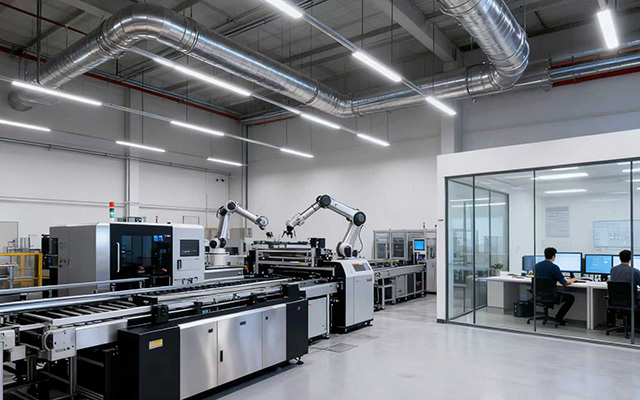
Modern manufacturing facilities in China have transitioned from labor-intensive assembly to fully automated Factory 4.0 production environments. Advanced grid-casting technology, computerized paste-mixing systems, and precision curing chambers ensure extreme batch consistency.
By integrating real-time spectroscopy and multi-stage automated cell test cycles, manufacturers like Fujian SK Battery Co., Ltd. ensure that every cell matches strict tolerance levels. This reduces voltage discrepancies between serial connections, extending the overall lifecycle of large-scale battery banks.
In the context of global supply chain disruptions, China’s industrial parks provide structural resilience through the localized integration of lead smelting, container injection molding, valve manufacturing, and packaging materials. This proximity reduces delivery lead times, ensures stable pricing despite raw material volatility, and simplifies containerized export logistics.
The selection of the appropriate cell chemistry depends heavily on ambient environmental conditions, charge/discharge rates, maintenance accessibility, and capital budget allocation. Below, we examine the typical environments where deep cycle lead-acid cells offer superior stability and return on investment compared to alternative systems.
Base stations in desert environments or high-altitude regions face daily temperatures ranging from -20°C to +50°C. Standard lithium-ion batteries require climate-controlled HVAC structures to prevent thermal runaway or cold-temperature charge blocking. Standard deep cycle gel configurations, which employ silica-gel electrolyte matrices, exhibit excellent thermal capacity and lower sensitivity to temperature fluctuations. They prevent electrolyte stratification and survive outdoor installations without active heating or cooling infrastructure.
For residential and small-scale commercial solar setups where battery replacement logistics are costly, deep cycle batteries provide a dependable storage backup. Using a combination of AGM (Absorbent Glass Mat) separator sheets and low-pressure relief valves, these batteries operate in any orientation, prevent acid leaks, and eliminate regular maintenance. This makes them ideal for installation in rural areas without professional service staff.
Electric forklifts, automated guided vehicles (AGVs), and scissor lifts demand sustained currents over long shifts. True deep cycle batteries provide the structural durability needed to handle high-vibration environments, mechanical shocks, and deep daily discharges. They offer predictable performance and reliable energy delivery across their service life.
Established in 2021, Fujian SK Battery Co., Ltd. is situated in Fujian, the industrial core of China's new energy industry. Benefiting from convenient transportation and comprehensive supply chain resources, we specialize in high-reliability chemical technologies, including Ni-MH batteries, Ni-Cd batteries, lithium iron phosphate batteries, ternary lithium batteries, and sodium-ion batteries.
We provide tailored battery systems for emergency lighting, solar streetlights, wireless communication equipment, and smart home networks. With deep expertise in battery application scenarios, our engineering team focuses on solving core operational problems customers face during usage. We offer professional technical support, comprehensive certification services, and customized battery configurations designed to help clients achieve high efficiency, system reliability, and long-term operating value.
 SK Battery