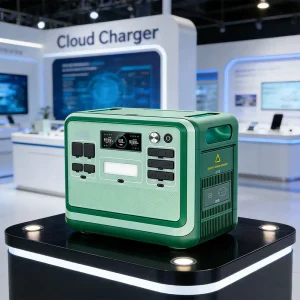
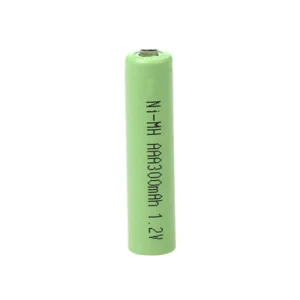
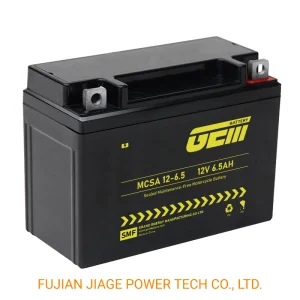
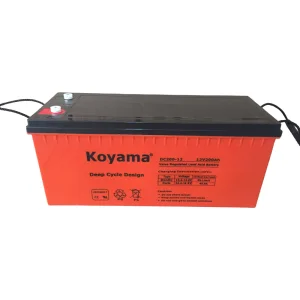
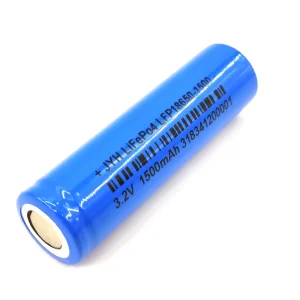
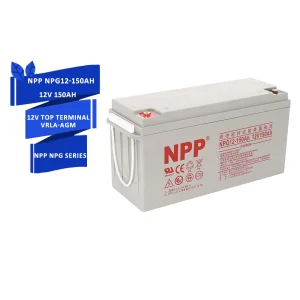
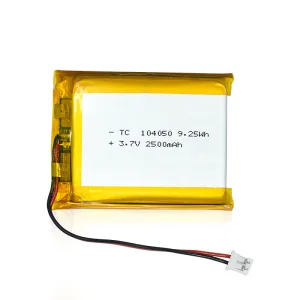
Engineered with cutting-edge voltage regulation parameters to deliver maximum efficiency and protection.
Positioned at the epicenter of China's green energy innovations to deliver certified high-reliability products.
Fujian SK Battery Co., Ltd. was established in 2021 and is located in Fujian, the center of China's new energy industry. Benefiting from convenient transportation and the comprehensive supply chain resources of this industrial cluster, we have built a state-of-the-art infrastructure designed to deliver maximum value, precision, and compliance to partners across the globe.
We specialize in Ni-MH batteries, Ni-Cd batteries, lithium iron phosphate batteries, ternary lithium batteries, and sodium-ion batteries, providing battery solutions for emergency lighting, solar lights, wireless communication, and smart home systems. With deep expertise in battery application scenarios, we focus on solving core problems customers encounter during usage, offering professional technical support and services, as well as customized battery solutions to help clients achieve higher efficiency and greater value.
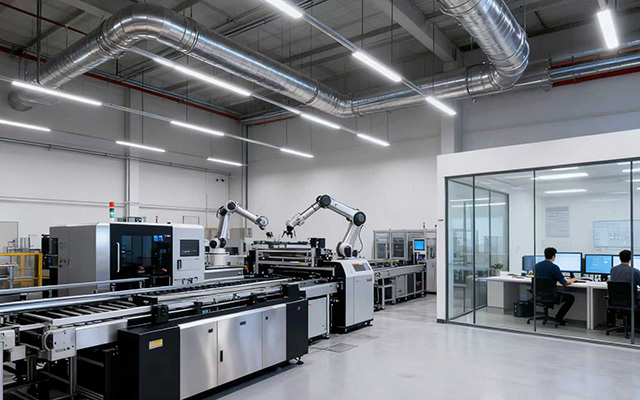
Voltage regulation is the primary safeguard of electrochemical energy systems. Without precise voltage limits, advanced cell chemistries degrade rapidly, leading to issues ranging from capacity fade to catastrophic thermal runaway. As a leading China Best Battery Voltage Regulator Exporter, Fujian SK Battery Co., Ltd. implements state-of-the-art active balancing topologies and precision control systems to optimize safety, longevity, and efficiency.
Key Insight: Modern battery voltage regulation has transitioned from simple passive heat-dissipation shunting to dynamic, software-defined active balancing. This enables real-time impedance tracking, energy redistribution, and microsecond-level fault isolation.
The demand for high-performance battery voltage regulators has grown alongside the adoption of renewable energy storage systems (BESS), electric mobility, and telecommunication networks. In major industrial markets like Europe, North America, and Southeast Asia, voltage regulation is no longer an optional safety add-on but a regulatory requirement.
Modern utility grids require energy systems to maintain tight voltage thresholds to comply with strict grid-code requirements. For exporter companies, this means complying with standards such as UL 1973, IEC 62619, and UN38.3. Our integration of battery voltage regulators directly combats the issues of uneven cell aging. In large-scale systems, even a minor 10mV variance between cells can lead to a 15% reduction in overall pack life. By deploying high-precision active-voltage regulation circuits, we ensure uniform cell potentials across thousands of cycles.
Different battery chemistries exhibit unique voltage profiles, requiring specific voltage regulation strategies:
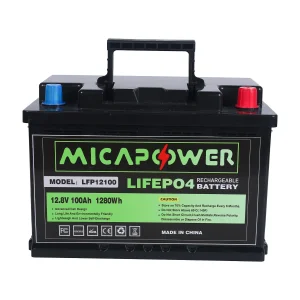
Characterized by an extremely flat discharge curve. Standard voltage regulation is ineffective here. Our system uses high-resolution ADCs to monitor and regulate voltage variations as narrow as 1mV, maintaining safety and optimal state-of-charge calculation.
As the primary low-cost alternative to lithium, sodium-ion requires specialized regulation profiles due to wider operating voltage windows. Our regulators are calibrated to manage these wide swings safely, preventing cell degradation.
These chemistries require precise overcharge detection. We implement negative delta voltage (-ΔV) sensing combined with temperature-coefficient-based voltage termination to prevent venting and gas build-up.
Voltage regulators are tailored to support distinct applications across global micro-climates and industries:
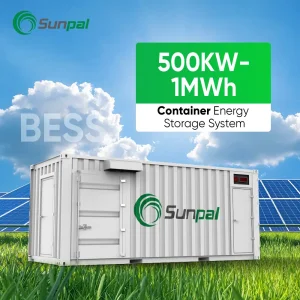
For grid-scale containerized storage systems (such as the 1MWh LFP containers), voltage regulation is scaled using a multi-tiered architecture. Each module features local voltage balancing, reporting back to a master control unit that stabilizes the DC bus. This reduces system-wide mismatch losses and maximizes round-trip energy efficiency (RTE).
Critical inquiries answered by our senior engineering division regarding voltage regulation, safety, and export protocols.
Passive balancing dissipates excess energy from high-voltage cells as heat through resistors, which is inefficient and generates thermal loads inside the pack. Active balancing uses capacitive or inductive charge shuttling to redistribute energy from high-voltage cells to lower-voltage cells. This minimizes energy loss, reduces heat, and extends pack runtime and life.
LiFePO4 has an extremely flat charge/discharge curve between 10% and 90% SOC. Because the voltage changes minimally across this range, a standard voltage sensor cannot accurately estimate charge level. Precision regulators with high-resolution Analog-to-Digital Converters (ADCs) are required to monitor subtle voltage changes and prevent cell over-charging or over-discharging.
All systems exported by Fujian SK Battery Co., Ltd. comply with global safety standards. This includes UN38.3 for transport safety, CE certification for the European economic area, and UL1642 / UL1973 for battery cells and modules. These certifications ensure safe operation under mechanical, electrical, and thermal stress conditions.
At low temperatures, the internal resistance of cells increases, leading to larger voltage drops under load. Our smart voltage regulators adaptively scale back charge rates and trigger integrated heating blankets or adjustment algorithms to prevent lithium plating and permanent capacity loss.
We offer full customization of the voltage regulation threshold, over-current protection limits, communication protocols (CAN, RS485, Modbus), and physical form factors. This ensures integration into existing application designs, from small consumer devices to containerized industrial microgrids.
Engineered for extreme performance and stable voltage output in demanding industrial and consumer settings.
 SK Battery