Busan, the maritime capital of South Korea and home to the world’s sixth busiest container port, represents a highly complex industrial ecosystem. The city is a major powerhouse for shipbuilding, heavy engineering, marine logistics, and high-tech automotive component manufacturing. In these sectors, reliable electrical energy is paramount. This environment demands robust performance from non-rechargeable batteries, which must operate flawlessly under extreme marine conditions, sub-zero logistics operations, and isolated smart grid infrastructure installations.
In maritime shipping, oil & gas offshore extraction, and terminal logistics at the Port of Busan, engineers rely heavily on primary (non-rechargeable) lithium batteries. These cells are selected for their long life expectancy (often exceeding 10 years) and minimal maintenance requirements. Standard battery chemistries struggle to perform in these saline, high-humidity, and temperature-fluctuating environments. Our industrial-grade Lithium Manganese Dioxide (Li-MnO2) and Lithium Thionyl Chloride (Li-SOCl2) batteries are engineered to resist these environmental challenges. They offer reliable performance for vessel automatic identification systems (AIS), smart utility meters, and offshore telemetry units.
Within Busan’s industrial districts—including Noksan Industrial Complex and Mieum Industrial Park—high-precision manufacturing processes call for stable back-up power. Passivation, temperature sensitivity, and self-discharge rates are not just technical specifications; they are critical vectors for commercial viability. Our engineering processes are tailored to prevent passivation in primary lithium batteries. This ensures that emergency back-up systems, localized IoT field nodes, and valve controls remain ready to deploy even after long periods of inactivity.
The global primary battery market is undergoing a major technological transformation. Driven by the expansion of the Internet of Things (IoT) and widespread adoption of smart utility grids, there is an unprecedented demand for long-life, non-rechargeable power sources. These systems require primary batteries because maintaining or recharging secondary batteries across large-scale remote installations is economically unfeasible. For example, replacing a battery on a remote smart water meter or a marine cargo tracker can cost ten times the value of the battery itself in labor and transport fees.
Technological focus has shifted toward reducing self-discharge rates and improving seal integrity. Standard batteries suffer from dry-out or internal short-circuits caused by moisture ingress or chemical leakage. Modern high-reliability requirements demand hermetic glass-to-metal sealing and robust internal construction. As global logistics networks become more integrated, tracking cargo across trans-oceanic routes requires long-lasting primary batteries. These cells must withstand prolonged storage and then reliably deliver sustained pulses of energy to transmit data via satellite or cellular networks.
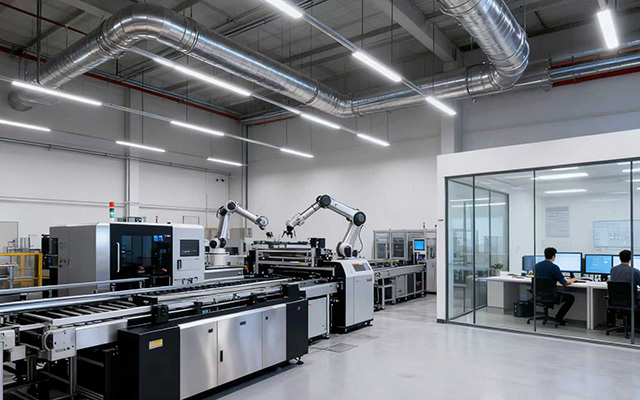
In China, new battery factories are using Industry 4.0 manufacturing processes to meet these international quality standards. The new energy industry is concentrated in regions like Fujian, which benefits from robust supply chains, high-precision automated manufacturing, and strict quality control protocols. Advanced automation is critical for primary lithium battery production, where even microscopic impurities in the raw materials can cause premature capacity loss or internal short circuits.
By using automated environmental controls, precise electrolyte filling systems, and inline computer-vision testing, Chinese factories can consistently produce batteries that meet or exceed global standards. This automated approach ensures that every batch of batteries, from ER series cylindrical cells to specialized military-grade tactical power packs, exhibits uniform electrochemical performance. This supply chain reliability enables global exporters to provide cost-effective, high-quality primary power solutions to international markets like Busan, Rotterdam, and Singapore.
Uses specialized structural seals to prevent electrolyte evaporation and moisture ingress. This ensures a 10-year shelf life under extreme marine conditions.
Features integrated safety vents and PTC (Positive Temperature Coefficient) resistors to prevent runaway currents in high-drain applications.
Controls chemical passivation on the lithium anode. This prevents voltage drop while maintaining a low self-discharge rate.
Fujian SK Battery Co., Ltd. was established in 2021 and is located in Fujian, the center of China's new energy industry. Benefiting from convenient transportation and comprehensive supply chain resources, we deliver high-quality energy solutions to global industrial markets, including South Korea’s major ports and manufacturing centers.
We specialize in Ni-MH batteries, Ni-Cd batteries, lithium iron phosphate batteries, ternary lithium batteries, and sodium-ion batteries, providing battery solutions for emergency lighting, solar lights, wireless communication, and smart home systems. With deep expertise in battery application scenarios, we focus on solving core problems customers encounter during usage, offering professional technical support and services, as well as customized battery solutions to help clients achieve higher efficiency and greater value.
Connect With Our Technical Director
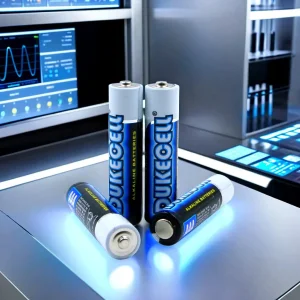
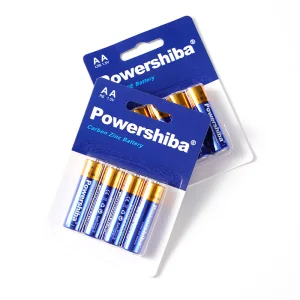
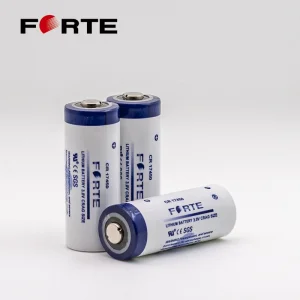
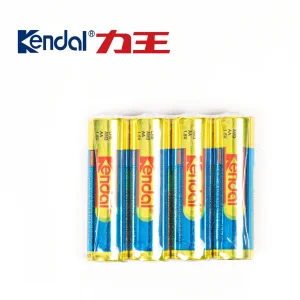
To help engineers and procurement directors identify the correct battery chemistry, we have detailed three localized application scenarios relevant to the Busan industrial market:
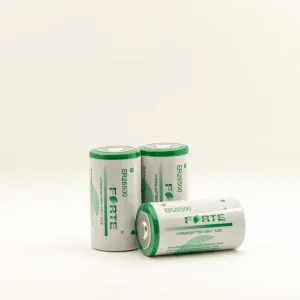
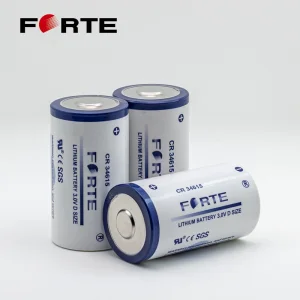
Off the coast of Busan, oceanographic monitoring stations and telemetry buoys collect wave data, water temperatures, and salinity profiles. These systems are subject to constant movement, high humidity, and sub-zero winter temperatures. If a battery fails prematurely, the marine research vessel dispatch costs can exceed the value of the battery itself. For these deep-water deployments, we recommend our D-size CR34615 (3.0V 12Ah) and ER26500 (3.6V C-size) lithium batteries. Their hermetic seals prevent moisture ingress, and the high-energy density provides sustained power for cellular and satellite transceivers in cold waters.
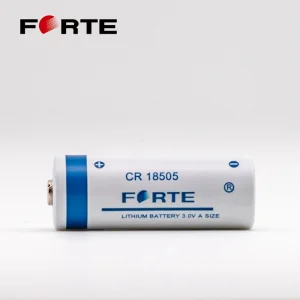
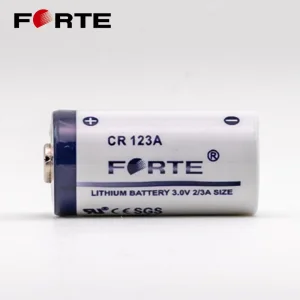
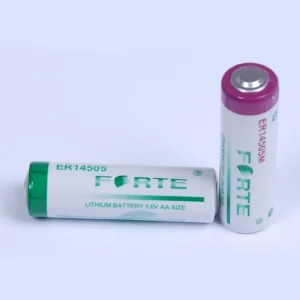
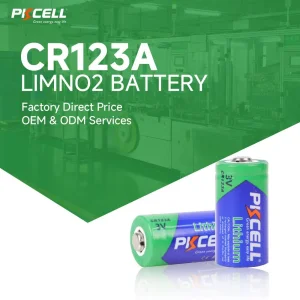
The Port of Busan is modernizing its terminal operations using automated cranes, tracking units, and high-frequency RFID transponders. While heavy container transport units rely on large rechargeable lithium systems, the localized sensor arrays and tracking nodes require maintenance-free primary batteries. These nodes must operate continuously without battery replacements to avoid interrupting port operations. Our CR123A and ER14505 AA lithium batteries provide reliable, long-term power under high-vibration conditions, ensuring continuous tracking and positioning across the terminal.
Metropolitan utility companies in South Gyeongsang province are deploying smart gas and water meters. These systems are designed to operate for 10 to 15 years on a single primary battery. The key challenge in smart metering is preventing battery passivation during long idle periods. Our ER26500 and CR17450 batteries use optimized passivated surfaces that maintain a low self-discharge rate (under 1% per year) while delivering the voltage pulses needed for wireless data transmission.
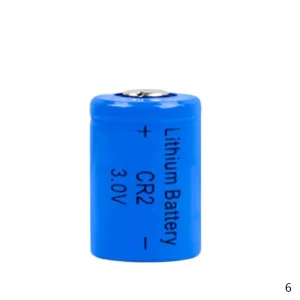
Li-MnO2 (Lithium Manganese Dioxide, e.g., CR series, nominal voltage 3.0V) is ideal for applications requiring medium pulse currents and good performance at low temperatures. It features excellent pulse current capability and has less passivation issues. Li-SOCl2 (Lithium Thionyl Chloride, e.g., ER series, nominal voltage 3.6V) offers higher energy density, a wider operating temperature range, and an extremely low self-discharge rate, making it suitable for long-term, low-current applications like smart water meters. However, Li-SOCl2 is more prone to passivation if stored for long periods without load activation.
Passivation is a natural chemical phenomenon in lithium primary batteries where a thin film of lithium chloride (LiCl) forms on the lithium anode. This film protects the battery from self-discharging. To prevent a sudden voltage drop (voltage delay) when a high-current load is applied, we optimize the electrolyte formulation during manufacturing. For stored batteries, we recommend a depassivation procedure (applying a small discharge load) prior to field installation to restore the battery's active surface area.
Yes. All of our primary lithium batteries are certified under UN38.3. This protocol tests batteries under simulated high-altitude, vibration, shock, external short circuit, impact, and overcharge conditions. We use specialized export packaging with insulated terminal protection. Our location in Fujian provides direct shipping routes to the Port of Busan, minimizing transport times and ensuring transit safety.
We maintain strict compliance with international manufacturing and safety standards. Our facilities are certified under ISO9001 and ISO14001. Our primary battery products carry UL1642, CE, RoHS, and REACH certifications. These quality systems ensure that our batteries are safe to export and integrate into complex electronic equipment in South Korea, the EU, and the United States.
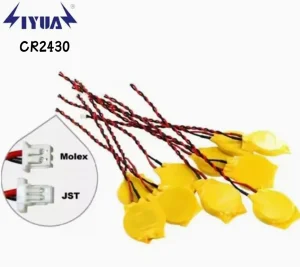
Yes. We offer complete OEM services, including custom battery packs, spot-welded wire leads, specialized connectors, and private label printing. This allows South Korean distributors and OEMs to integrate our cells directly into their product enclosures, reducing local assembly costs and accelerating time-to-market.
 SK Battery