Explore our highly engineered industrial battery components designed for demanding unmanned systems, backup storage, and heavy-duty operation profiles.
Unmanned Aerial Vehicles (UAVs) have transitioned from recreational toys to critical infrastructure across modern sectors including precision agriculture, tactical cargo delivery, structural inspection, and geodetic surveying. As payloads become more complex and flight missions lengthen, the energy system becomes the primary bottleneck restricting operational efficiency.
To overcome flight time limits, drone developers and enterprise users are looking beyond standard consumer-grade battery packs. Global sourcing managers are focused on advanced drone battery factories capable of providing high energy density, high discharge (C-rating) performance, and intelligent Battery Management Systems (BMS) with real-time analytics.
This report offers a comprehensive look at the world’s leading drone battery production hubs, detailing essential electrochemical developments, manufacturing advantages in China, and criteria for industrial procurement.
Analyzing the structural, geological, and industrial advantages that position Chinese factories at the core of the global drone power supply chain.
From lithium mining and chemical refining (cobalt, nickel, manganese) to advanced separator film production and automatic cell winding, China houses the complete raw-material-to-finished-product pipeline. This prevents international shipping delays and bottlenecks for rare minerals.
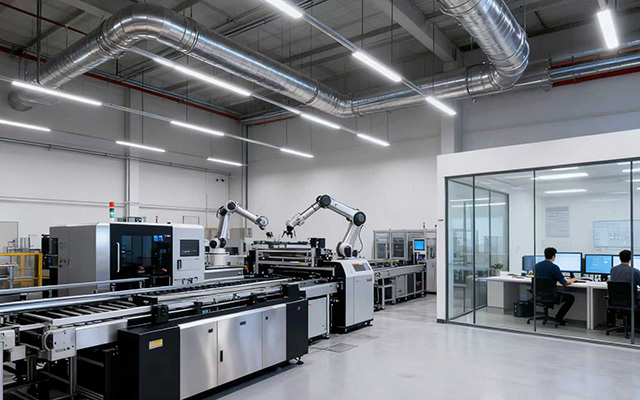
Top-tier Chinese manufacturers operate Class 100 cleanrooms and employ automated AI visual inspection systems to identify microscopic cell defects. These processes minimize discrepancies in internal resistance and maximize discharge uniformity.
Centering around hubs like Fujian and Guangdong allows manufacturers to benefit from localized R&D knowledge sharing, access to battery chemistry research centers, and fast logistics networks to global shipping ports.
How next-generation battery chemistries are changing the capabilities of unmanned aerial systems.
Traditional Lithium Polymer (LiPo) cells peak around 250-260 Wh/kg. Semi-solid-state cells push the boundary further, achieving 300 to 380 Wh/kg. Removing volatile liquid electrolytes improves energy density and safety, reducing thermal runaway risks under impact.
Increasing nominal cell voltage from 3.7V to 3.85V (and charge cut-off from 4.2V to 4.35V or 4.4V) yields immediate energy storage increases without adding physical mass, helping extend flight windows for commercial drones by 15-20%.
Modern industrial drones require active monitoring of parameters. Advanced Battery Management Systems track individual cell voltage, internal resistance, history cycle count, temperature, and run-time remaining, communicating this data via CAN Bus or SMBus protocols to the flight controller.
At high altitudes or in polar regions, traditional lithium chemistry loses up to 50% of active capacity. Low-temperature cell formulations maintain active ion mobility, preserving 80%+ capacity even down to temperatures of -30°C and -40°C.
Different commercial UAV sectors require tailored discharge behaviors, thermal characteristics, and cycle life expectations.
Scenario: Heavy payload multirotors carrying chemical fertilizers and spray systems.
Power Demand: High continuous current discharge (15C to 25C) to handle high-torque takeoffs and wind stabilization, IP67 dust/water resistance for field use, and rapid charge turnarounds (under 30 minutes).
Scenario: Fixed-wing or VTOL drones monitoring oil pipelines, power grids, and borders.
Power Demand: Maximized energy density (Wh/kg) to sustain flights beyond 2 hours. Lower continuous discharge rates (2C to 5C) are preferred over bursts, prioritizing weight reduction above all.
Scenario: Medical cargo or commercial package transport over long urban/rural routes.
Power Demand: High redundancy BMS, high cycle lifespans (500+ deep discharge cycles), and built-in self-heating systems for reliable, all-weather flight operations.
Industrial Battery Innovations & Custom Integration Experts
Established in 2021, Fujian SK Battery Co., Ltd. is located in Fujian, the hub of China's new energy industry. Benefiting from convenient transportation infrastructure and comprehensive regional supply chain resources, we supply custom power solutions to international enterprises.
We specialize in Ni-MH batteries, Ni-Cd batteries, lithium iron phosphate (LiFePO4) batteries, ternary lithium batteries, and sodium-ion batteries. Our systems support emergency lighting, solar lighting, wireless communication, smart home systems, and specialized UAV backup power projects.
Our engineering team focuses on solving technical integration challenges, offering OEM/ODM design services, strict quality assurance, and custom cell arrangements to help clients optimize operational efficiency.
Key technical parameters and verification processes for international sourcing managers when evaluating drone battery manufacturers.
Ensure the supplier possesses full test reports for international logistics: UN38.3 (lithium transport), MSDS, UL1642 (cell safety), UL2054 (pack safety), and CE / FCC. Missing certifications can lead to customs delays or shipping confiscations.
Ask factories about their cell grouping tolerances. High-quality packs keep internal resistance variances under 1-2 milliohms and voltage tolerances under 5mV across all cells in a series, preventing premature pack degradation.
The Battery Management System should offer multi-stage protection: over-voltage, under-voltage, over-current, short-circuit, and high/low temperature limits. Look for active balancing features to maximize the lifespan of multi-cell packs (e.g., 6S, 12S, 14S, 18S).
Addressing key technical questions regarding UAV battery selection, safety, care, and logistics.
LiHV (Lithium High Voltage) batteries can be safely charged to 4.35V or 4.4V per cell, compared to 4.2V for standard Lithium Polymer (LiPo) cells. This higher voltage range increases nominal energy capacity, providing longer flight times without increasing overall pack weight.
The C-rating represents how quickly a battery can discharge its stored energy. A 25C battery can deliver a continuous current up to 25 times its capacity. Industrial drones carrying heavy payloads or operating in windy conditions need higher C-ratings to handle power demand spikes during rapid climbs or maneuvers.
LiFePO4 (Lithium Iron Phosphate) offers excellent safety, thermal stability, and long cycle life (often over 2,000 to 3,000 cycles). However, its lower nominal voltage (3.2V) and lower energy density (typically 120-160 Wh/kg) make it heavy for airborne flight power, though it remains ideal for ground control stations and portable field chargers.
Batteries should be stored at a stable storage charge (typically 3.8V to 3.85V per cell) inside fireproof containers or explosive-containment bags. They should be kept in a climate-controlled room (15°C to 25°C), away from direct sunlight, humidity, and combustible materials.
Smart BMS boards use digital protocols like CAN Bus, I2C, or SMBus. They transmit real-time data—such as individual cell voltages, temperature, consumed capacity, and current flow—directly to the drone autopilot. This allows the system to warn pilots or trigger automated return-to-home protocols before a critical power loss occurs.
Standard production lead times for custom packs typically run between 4 to 6 weeks from technical drawing approval. Prototypes for testing can usually be assembled in 10 to 15 days, depending on cell chemistry availability and specialized housing requirements.
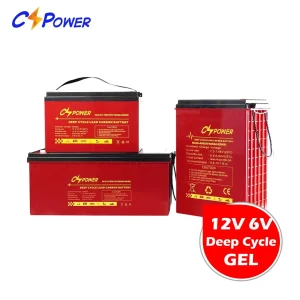
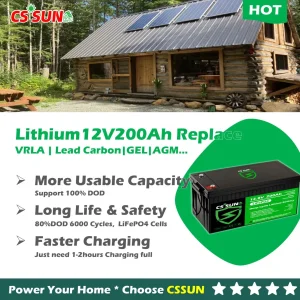
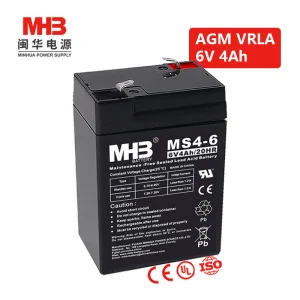
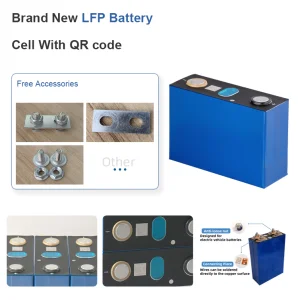
Browse our collection of heavy-duty deep cycle cells, rechargeable lithium packs, and specialized storage modules for global distribution.
 SK Battery