Why are lithium batteries so popular? Their appeal is visible in everyday life: a smartphone survives a full workday, an electric vehicle travels hundreds of kilometres, and a home energy system stores sunlight for evening use. Lithium-ion cells offer high energy density, relatively low weight, and strong recharge performance. These qualities support products that demand compact power and dependable cycling.
Professor John B. Goodenough, a Nobel Prize-winning battery pioneer, captured their influence clearly: “Lithium-ion batteries have revolutionized our lives.” His observation explains only part of the story. Battery popularity also depends on manufacturing scale, safety engineering, raw-material management, and consistent quality control. Performance alone is not enough.
China’s top lithium battery suppliers have built major advantages across this value chain. Companies such as CATL, BYD, EVE Energy, and Gotion High-Tech invest heavily in cell chemistry, automated production, testing, and recycling research. Their factories can produce enormous volumes while serving electric vehicles, energy storage projects, and consumer electronics markets. That scale often reduces costs and shortens delivery times.
Yet the industry is not flawless. Higher production volume can create pressure on minerals, water use, factory safety, and end-of-life recovery. Product labels may also hide differences in chemistry, warranty terms, and real-world durability. Buyers need evidence, not impressive claims. This introduction examines why Chinese suppliers remain so popular, how their technologies compete, and where their advantages may still require closer scrutiny. Popular does not always mean perfect. That distinction matters.
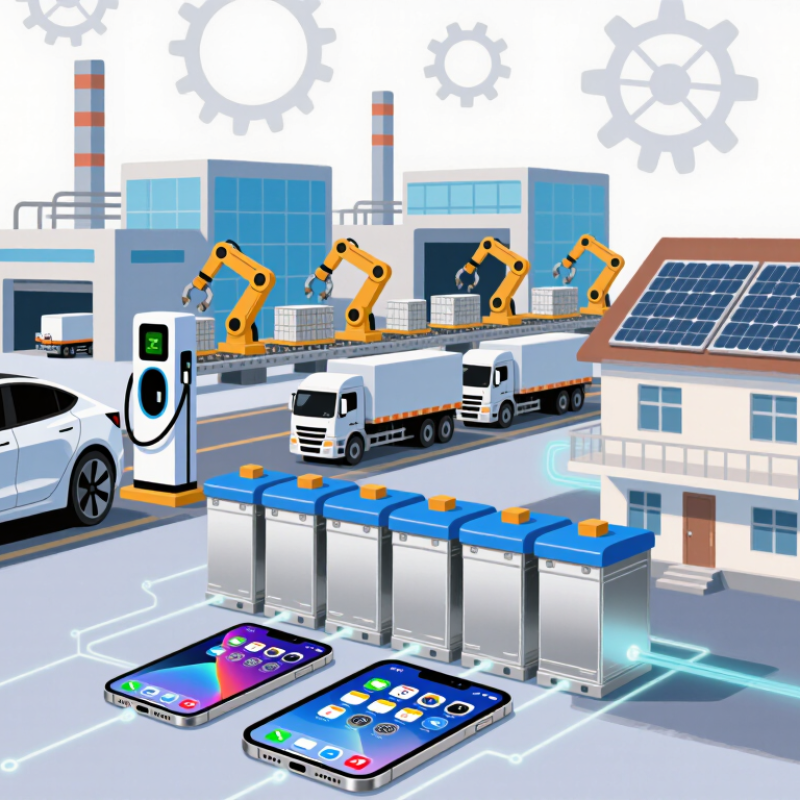
China’s lithium battery supplier industry is defined by scale, engineering depth, and fast production cycles. Many suppliers operate integrated facilities, from electrode coating to cell assembly and pack testing. This structure shortens communication time and supports consistent process control. It also helps manufacturers adjust designs for electric vehicles, energy storage cabinets, and portable equipment.
Reliable suppliers show their capabilities with measurable evidence. Buyers should review capacity records, safety test reports, material traceability, and quality-control procedures. On a factory visit, details matter: clean-room conditions, electrode thickness checks, welding samples, and battery-management system tests reveal more than polished brochures. Strong suppliers also monitor temperature, voltage balance, cycle life, and abuse resistance during development.
Cost remains important, but it should not replace technical judgment. Some factories offer attractive prices by reducing inspection steps or using less consistent materials. That risk may appear later as uneven capacity, swelling, or shorter service life. No supplier is perfect. Even experienced teams can misjudge demand or face raw-material changes. Clear contracts, sample validation, and regular audits reduce these weaknesses. Industry credibility grows when suppliers admit limitations, document corrective actions, and communicate delays before they affect production.
China’s Top 10 Lithium Battery Suppliers: How They Are Selected
Selection should begin with verifiable performance, not publicity. The International Energy Agency reported that China held about 80% of global battery cell manufacturing capacity in 2023. This scale matters, but scale alone proves little. Our evaluation considers shipment volume, usable energy density, cycle life, thermal safety, and production consistency. Independent laboratory results receive more weight than marketing claims.
A reliable supplier must also show strong quality controls. We review factory audits, process traceability, defect rates, warranty records, and compliance with international transport and safety standards. Financial stability matters because battery projects often require years of supply. The ranking also compares recycling plans and material sourcing transparency. Industry data from Benchmark Mineral Intelligence and the IEA helps verify market position, although private shipment figures remain difficult to confirm. This method is not perfect.
Tips: Ask for recent test reports, not old certificates. Compare the same test conditions. Check performance after repeated charging, heat exposure, and storage. A supplier with slightly lower capacity may offer better long-term reliability. Buyers should also request sample cells and inspect batch-level records before signing large contracts. Fancy specifications can hide weak consistency.
The scale of China’s lithium battery supply industry is closely linked to strong demand across electric vehicles, stationary energy storage, and consumer electronics. These market segments are key reference points when evaluating leading suppliers.
2023 global lithium-ion battery demand by application, shown in approximate gigawatt-hours (GWh). EV battery demand exceeded 750 GWh, stationary storage approached 100 GWh, and consumer electronics demand was approximately 80 GWh. Source: International Energy Agency, Global EV Outlook 2024; values rounded for presentation.
Leading Chinese battery makers compete through chemistry, manufacturing scale, and fast engineering changes. The International Energy Agency reported that China produced about 75% of global battery cells in 2023. This concentration supports lower costs and tighter supply networks. Lithium iron phosphate chemistry is widely used because it offers thermal stability, long cycle life, and reduced reliance on expensive metals. Cell-to-pack designs remove unnecessary modules. More cells then fit inside the same vehicle floor. That can improve driving range and reduce structural weight.
Manufacturers also invest heavily in intelligent production. Automated coating lines monitor electrode thickness in real time. Digital quality systems can identify tiny defects before assembly. Dry-electrode research may reduce solvent use and factory energy demand, although commercial performance still needs careful verification. BloombergNEF reported that average lithium-ion pack prices fell to 115 dollars per kilowatt-hour in 2024. Scale helped drive this decline, but raw-material prices also mattered. Technology alone does not explain everything.
Tips: Buyers should compare cycle-life testing, usable capacity, safety records, and warranty conditions. Ask whether test results reflect real temperatures and charging habits. Factory speed can impress visitors. It can also hide inconsistent quality. IEA data shows strong growth, but global supply chains remain exposed to policy changes and mineral shortages. Sodium-ion batteries may widen future options, yet their energy density is still a practical weakness. Claims should be checked against independent reports.
Chinese lithium battery suppliers are popular because their industrial ecosystem is unusually complete. Cell makers, material processors, equipment builders, and testing laboratories often operate within connected regions. This reduces transport time and speeds up technical communication. In practical sourcing work, a buyer can compare samples, review production records, and discuss changes with engineers during one project.
Scale is another strong advantage. Large production lines support competitive pricing without automatically sacrificing performance. Suppliers can offer different cell formats, energy capacities, thermal controls, and battery management systems. Many also support custom packaging for electric vehicles, energy storage units, and portable equipment. A technical team may test charging cycles, vibration resistance, temperature behavior, and safety protection before shipment. These details build confidence.
The picture is not flawless. Some quotations look attractive but exclude testing, certification, tooling, or delivery costs. Quality can also vary between factories using similar specifications. Buyers should request traceable documents, recent test data, production samples, and clear warranty terms. Independent inspections remain valuable. I have found that careful questions reveal more than polished factory photographs. Chinese suppliers are popular for real reasons, but trust still requires evidence, patient communication, and repeated verification.
China’s lithium battery industry is moving from export-led growth toward a wider, more localized market strategy. Its strongest demand still comes from electric vehicles, but stationary energy storage is expanding quickly. Containerized systems now support solar farms, factories, and urban backup power. In Southeast Asia, batteries serve electric scooters and small commercial vehicles. In Europe and North America, buyers increasingly request traceable materials, stable performance, and local service capacity. These requirements are changing how suppliers compete. Price alone is no longer enough.
Manufacturing experience remains a major advantage. Large production clusters connect cell makers with equipment firms, material processors, testing laboratories, and logistics providers. This shortens feedback cycles when a cell design needs adjustment. Engineers can compare temperature behavior, charging speed, and cycle life across demanding applications. Yet scale creates pressure. Oversupply can reduce margins and weaken quality controls if expansion moves too fast. A low quoted price may hide maintenance, training, or recycling costs. Buyers should verify test methods and warranty conditions, not rely on impressive brochures.
Future growth will depend on safer chemistries, smarter battery management, and more transparent supply chains. Sodium-ion technology may serve cost-sensitive storage, while silicon-rich materials could improve energy density. Recycling will become more important as early electric vehicles reach retirement. Digital records may track raw materials, production batches, and repair history. However, some forecasts seem too optimistic. Grid connections, fire-safety rules, and skilled technicians remain practical limits. China’s next advantage may be reliable integration, not simply making more cells.
| No. | Competitive Driver | Data Dimension | Verified Market Evidence | Why It Increases Supplier Popularity | Key Markets and Future Trend |
|---|---|---|---|---|---|
| 1 | Manufacturing Scale | Global battery cell manufacturing capacity | China represented approximately 80% of global battery cell manufacturing capacity in 2023. | Large-scale production supports shorter lead times, broader product portfolios, stronger supplier networks, and continuous process improvement. | Key markets: electric vehicles, energy storage, consumer electronics, and industrial equipment. Future growth will focus on overseas production and localized supply chains. |
| 2 | Cost Competitiveness | Average lithium-ion battery pack price | In 2023, the average global battery pack price was about US$139 per kWh, while the average price in China was approximately US$126 per kWh. | Lower costs improve the total economics of electric vehicles and stationary storage projects, especially in price-sensitive markets. | Key markets: Asia, Europe, Latin America, and the Middle East. Future cost reductions will depend on automation, material efficiency, and recycling. |
| 3 | LFP Chemistry Leadership | Lithium iron phosphate battery adoption | LFP batteries accounted for roughly two-thirds of China’s electric vehicle battery market in 2023, according to international energy market analysis. | LFP chemistry offers strong thermal stability, long cycle life, and lower dependence on nickel and cobalt, making it attractive for mass-market vehicles and storage. | Key markets: standard-range electric cars, buses, commercial vehicles, and grid storage. Future development includes higher energy density and improved cold-weather performance. |
| 4 | Integrated Raw-Material Ecosystem | Battery-material processing and component supply | China is the leading global center for processing several battery materials, including lithium, graphite, cobalt, and related cathode and anode components. | Access to materials, precursors, separators, electrolytes, and battery-management components reduces logistics complexity and supply interruption risks. | Key markets: domestic manufacturing and export-oriented production. Future trends include diversified overseas sourcing, traceability, and lower-carbon refining. |
| 5 | Strong Domestic Demand | Electric vehicle market size | China sold more than 8 million electric cars in 2023, representing approximately 60% of global electric car sales. | A large home market enables suppliers to validate products at scale, collect operating data, and achieve faster commercialization before international expansion. | Key markets: passenger vehicles, buses, delivery fleets, and two-wheelers. Future demand will come from commercial electrification and replacement cycles. |
| 6 | High Battery Demand Density | Regional share of global battery demand | China accounted for close to 60% of global battery demand in 2023, supported by electric vehicles and stationary energy storage. | Concentrated demand encourages investment in large factories, specialized equipment, testing facilities, and local technical talent. | Key markets: automotive, renewable-energy storage, telecommunications backup, and data centers. Future demand will be increasingly balanced between mobility and storage. |
| 7 | Broad Export Capability | International market coverage | Chinese battery suppliers serve major vehicle and energy-storage markets across Europe, Southeast Asia, North America, Latin America, Africa, and the Middle East. | Established export channels, standardized product platforms, and experience with different certification requirements make international procurement easier. | Future growth will emphasize regional warehouses, local assembly, technical service centers, and compliance with local-content rules. |
| 8 | Energy-Storage Expansion | Stationary storage application potential | Global deployment of battery energy storage continues to expand as renewable power capacity increases and electricity systems require flexibility. | Suppliers can apply mature electric-vehicle cell technology to grid-scale systems, commercial storage, microgrids, and backup power. | Key markets: China, the United States, Europe, Australia, and emerging renewable-energy markets. Future products will prioritize long duration, safety, and lower system costs. |
| 9 | Technology Diversification | Cell formats and next-generation chemistry | The industry is developing multiple formats and chemistries, including prismatic, cylindrical, pouch, LFP, high-nickel, sodium-ion, and semi-solid-state systems. | A diversified technology portfolio allows suppliers to match battery performance, safety, cost, charging speed, and operating temperature to different applications. | Future trends include sodium-ion batteries for cost-sensitive applications, higher-voltage systems, fast charging, silicon-based anodes, and improved thermal management. |
| 10 | Recycling and Circular Supply Chains | End-of-life battery recovery and material reuse | China has developed one of the world’s largest battery-recycling ecosystems, supported by growing volumes of retired electric vehicle batteries and manufacturing scrap. | Recycling can recover lithium, nickel, cobalt, manganese, copper, and aluminum while reducing raw-material exposure and environmental impact. | Future markets will require stronger battery traceability, standardized dismantling, second-life applications, and stricter environmental compliance. |
It combines large-scale production, strong engineering, and rapid manufacturing cycles. Many facilities manage coating, cell assembly, and pack testing under one roof.
Review capacity records, safety reports, material traceability, and quality-control procedures. Factory details matter. Check clean rooms, electrode thickness, welding samples, and battery-management tests.
A low price may reflect fewer inspections or inconsistent materials. Problems can appear later as swelling, uneven capacity, or shorter service life.
It should define samples, test methods, warranty terms, delivery duties, and corrective actions. Regular audits help, though they cannot remove every risk.
Electric vehicles remain important. Energy storage is growing for solar farms, factories, and urban backup systems. Southeast Asia also needs batteries for scooters and small commercial vehicles.
They often request traceable materials, stable performance, and local service support. Price alone is less convincing now.
Safer chemistries, smarter battery management, and digital supply records may become more important. Sodium-ion cells could serve cost-sensitive storage, while silicon-rich materials may raise energy density.
Grid connections, fire-safety requirements, technician shortages, and recycling costs may slow expansion. Some forecasts sound too optimistic. Scale is not everything.
China’s lithium battery supplier industry has developed into a highly integrated manufacturing ecosystem covering materials, cell production, battery management systems, and complete energy storage solutions. The leading suppliers are selected based on factors such as production capacity, product consistency, safety management, research investment, cost control, and ability to serve different global markets. Their core technologies include high-energy-density cell chemistry, fast-charging design, thermal management, intelligent battery monitoring, and recycling-oriented manufacturing processes.
Why are lithium batteries so popular? They offer a strong balance of energy density, rechargeability, portability, and long-term operating value, making them suitable for electric transportation, consumer electronics, renewable energy storage, and industrial equipment. Chinese suppliers are especially competitive because of their efficient supply chains, large-scale production, expanding technical expertise, and flexible customization services. In the future, the industry is expected to focus on safer materials, longer service life, faster charging, improved recycling, and smarter energy systems as global demand for clean and reliable power continues to grow.

SK Battery