China Top Battery Suppliers What Affects Charging Speed?

Time:2026-10-05 Author:Isabella
0%

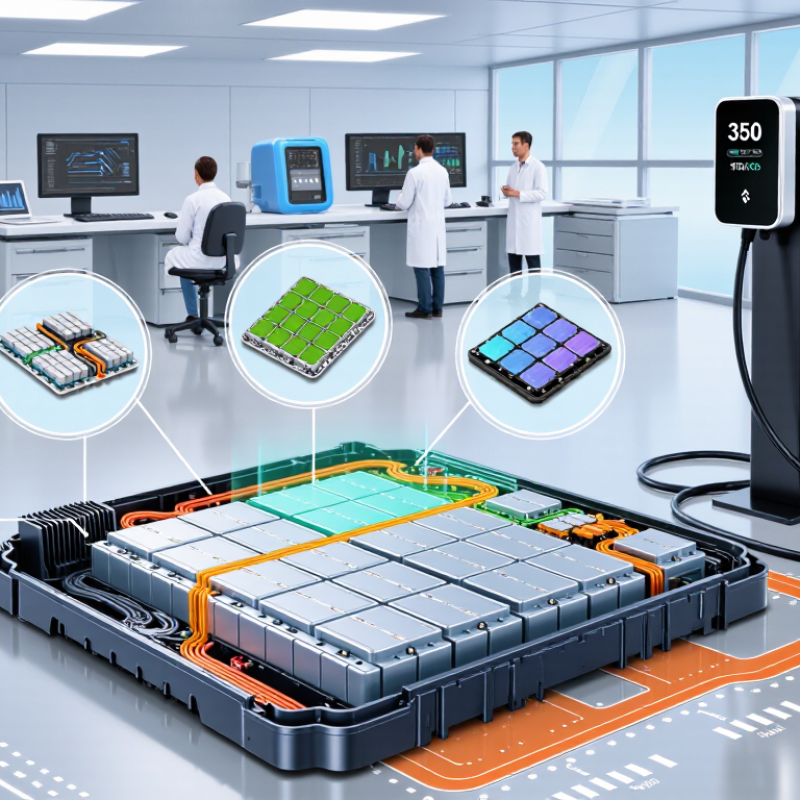
China’s leading battery suppliers compete on energy density, safety, cycle life, and charging performance. Yet charging speed is not decided by the battery label alone. The real answer to “What affects the charging speed of batteries” lies in several connected systems, from cell chemistry to the vehicle’s software.

Dr. Jeff Dahn, a respected lithium-ion battery researcher, has said, “The battery is the most important component of an electric vehicle.” His observation matters because fast charging begins inside the cells. Lithium-ion chemistry, electrode thickness, internal resistance, and cell temperature all influence how quickly current can enter safely. A cold battery may accept power slowly. A hot battery may also reduce charging speed to prevent damage. The battery management system constantly adjusts voltage and current, especially near a high state of charge.

Charger output matters too. A 350-kilowatt charger cannot force that power into a battery designed for less. Cable limits, connector temperature, pack voltage, and cooling capacity create further boundaries. Chinese suppliers increasingly use silicon-enhanced anodes, improved electrolytes, and advanced thermal-management designs. These developments can shorten charging stops, but they also require careful validation.

The charging curve tells the fuller story. Peak power may last only a few minutes. Afterward, current usually tapers. That is normal.

A simple supplier ranking can mislead buyers. Laboratory results may differ from a hot summer highway stop, an aging pack, or a nearly full battery. Reliable comparisons should examine charging time, temperature control, retained capacity, and repeated real-world tests—not only the highest advertised power.
China Top Battery Suppliers What Affects Charging Speed?

What Charging Speed Means in Battery Performance

Charging speed is more than a number on a charger display. It shows how quickly a battery accepts energy under specific conditions. Engineers usually describe this rate with “C.” A 1C charge can theoretically fill a battery in one hour. Real batteries rarely behave so neatly.

The U.S. Department of Energy’s Alternative Fuels Data Center notes that DC fast charging can often restore 80% capacity within 20–30 minutes. The result depends on battery size, temperature, charger output, and state of charge. Charging usually slows after 80%. This protects the cells from excessive heat and lithium stress. Temperature matters. So does chemistry.

The IEA’s Global EV Outlook 2024 reported more than four million public charging points worldwide at the end of 2023. That growth raises expectations for faster charging, but higher power is not automatically better performance. A battery may accept 250 kW briefly, then taper sharply near full charge. Cooling systems, cell matching, and software decide how long high power remains available. In practical testing, a cold battery may charge far slower than its specification suggests. I have also seen charging claims focus on peak power, while ignoring the average rate from 10% to 80%. That comparison is imperfect, but it is more useful. U.S. Department of Energy battery research continues to treat fast charging, safety, durability, and energy density as connected targets, not separate achievements.

How Battery Chemistry Affects Charging Rate

Charging speed is closely tied to battery chemistry, not only charger output. Lithium iron phosphate cells generally offer strong thermal stability and long cycle life. However, their charging rate can vary across different cell designs. Nickel-rich lithium-ion cells may accept higher power under suitable conditions. They also require tighter temperature and voltage control.

The anode matters as much as the cathode. Graphite can absorb lithium quickly, but cold charging increases the risk of lithium plating. That damage may reduce capacity and create safety concerns. In practical testing, a battery charging at 25°C often performs better than one charging near freezing. Heat also slows charging when the battery management system limits current.

A supplier should provide data for charging curves, not just a peak charging figure. Peak power may last only a few minutes. The average rate tells a more useful story. Engineers should examine cell resistance, cooling paths, state of charge, and pack balancing. A large battery may charge slowly if its thermal design is weak. That assumption is incomplete.

I have seen charging tests change after repeated cycles. Initial results can look impressive. Long-term performance needs more attention. Chemistry, temperature, electrode structure, and control software work together. Ignoring one factor can produce an unrealistic charging promise.

The Role of Battery Capacity and Cell Design

Charging speed is shaped by more than the charger’s advertised power. Battery capacity sets the energy window, while cell design determines how quickly that window can be filled. A 100 kWh pack may accept high power longer than a 50 kWh pack. However, it can also require more cooling and stronger electrical protection. Bigger is not always faster.

The International Energy Agency reported that global battery demand for electric vehicles reached about 750 GWh in 2023. Its Global EV Outlook 2024 also notes continued growth in fast-charging infrastructure. These figures show why suppliers are developing cells with lower internal resistance and improved thermal pathways. Larger-format cells can reduce connections inside a pack. That may lower electrical losses. Yet, one weak thermal zone can still limit the entire battery.

Charging usually slows near a high state of charge. The U.S. Department of Energy explains that direct-current fast charging commonly reaches about 80% within 20 minutes to one hour, depending on vehicle and battery conditions. Cell chemistry, electrode thickness, cooling plates, and the battery-management system all influence this result. In practical testing, a battery may charge quickly at 25°C but slow sharply in winter. That detail is easy to overlook. Capacity ratings also vary by testing method, so supplier comparisons need caution. More capacity can improve range, but refined cell design often matters more for repeatable charging speed.

China Top Battery Suppliers What Affects Charging Speed? - The Role of Battery Capacity and Cell Design

Technical Dimension Representative Value or Range Effect on Charging Speed Practical Interpretation
Battery capacity 50–100 kWh for a typical electric passenger vehicle A larger battery needs more energy for a comparable state-of-charge increase. At the same charging power, charging time is approximately proportional to the energy added.
Charging power 7.4 kW AC; 11–22 kW AC; 50–350 kW DC Higher power can transfer energy faster, provided the battery and charging system can accept it. A 100 kW charger does not guarantee 100 kW throughout the entire charging session.
C-rate 1C means a nominal full charge in about 1 hour; 2C means about 30 minutes under ideal conditions. Higher C-rates increase charging current and can reduce charging time. Actual time is longer because of charging losses, current tapering, temperature limits, and balancing.
Example current requirement A 75 kWh pack charged at 1C requires approximately 75 kW of battery-side power. The battery must safely accept the corresponding current without excessive heat or voltage rise. The required current depends on pack voltage; higher-voltage packs require less current for the same power.
Cell nominal voltage Approximately 3.2 V for many LFP cells; approximately 3.6–3.7 V for many NMC cells Cell chemistry determines voltage range, allowable current, heat generation, and charging control limits. Nominal voltage is different from the maximum charging voltage and should not be used alone to estimate charging time.
Electrode thickness Thin high-power electrodes generally provide shorter ion-transport paths than thick high-energy electrodes. Shorter diffusion paths reduce polarization and support higher charging currents. Thinner electrodes usually reduce energy density per unit volume, so design involves a speed-versus-capacity trade-off.
Electrode porosity and tortuosity Optimized pore networks allow electrolyte movement while maintaining sufficient active material. Better ion transport lowers internal resistance and improves fast-charge capability. Excessive compaction can restrict ion flow; excessive porosity can reduce volumetric energy density.
Cell format Cylindrical, prismatic, and pouch cells are common formats. Format affects current-collection distance, thermal paths, packaging efficiency, and connection resistance. No single format is always fastest; the electrode design, tabs, cooling system, and operating limits are decisive.
Internal resistance Lower resistance is preferred for high-power charging; resistance increases with age and low temperature. Heat generation rises approximately with the square of current: Pheat = I2R. High resistance can force the battery-management system to reduce charging current.
Battery temperature Many lithium-ion batteries charge most effectively near 15–35 °C; exact limits vary by cell design. Low temperatures slow ion transport and can increase lithium-plating risk; high temperatures accelerate degradation. Preheating or active cooling may be required before high-power charging is permitted.
State of charge Fast charging is commonly strongest at a low-to-medium state of charge and tapers near the upper limit. Constant-current charging transitions to constant-voltage charging as the upper voltage limit is approached. The final 10–20% can take disproportionately longer than the initial charging portion.
Charging-time example Adding 50 kWh at a steady 100 kW requires at least 30 minutes before losses and tapering. The theoretical estimate is time = energy added ÷ charging power. Real charging time is normally longer because power varies during the session.
Battery-management limits Limits are set by cell voltage, temperature, current, state of charge, and pack balance. The battery-management system reduces power whenever safety or durability thresholds are approached. Charging speed is determined by the lowest allowable limit among the cells and the charging hardware.

Note: Values are representative engineering ranges for lithium-ion battery systems. Actual charging performance depends on chemistry, cell construction, pack voltage, thermal management, charger capability, state of charge, temperature, and battery age.

Why Chargers, Cables, and Power Systems Matter

China Top Battery Suppliers: What Affects Charging Speed?

A battery pack cannot charge faster than its weakest link. The charger must deliver stable voltage and current. The cable must carry that current without excessive heat. The power system must also manage grid limits, conversion losses, and battery temperature. The U.S. Department of Energy’s Alternative Fuels Data Center lists typical Level 2 charging at about 7–19 kW, while DC fast chargers commonly begin near 50 kW. A higher rating does not always mean faster charging.

Cable design matters more than many buyers expect. Small conductor areas can increase resistance and heat, especially during long charging sessions. Liquid-cooled cables support higher current, but they add pumps, sensors, and maintenance points. The International Energy Agency reported more than four million public charging points worldwide by the end of 2023, with nearly 1.3 million added that year. This rapid expansion increases the need for reliable connectors and accurate thermal monitoring.

Battery suppliers should test the complete charging system, not only the cells. Charging may slow sharply above 80% state of charge. Cold cells also accept power poorly. A 350 kW charger can still deliver far less. That assumption is incomplete. In field testing, poor grounding, voltage fluctuation, or software limits may reduce speed further. Engineers should record cable temperature, input power, battery temperature, and charging time under real conditions. More testing is still needed across different climates.

What Affects Charging Speed?

Estimated 0–80% charging time for a 5,000 mAh lithium-ion battery at different available input-power levels. Values use a 3.85 V nominal battery voltage and an estimated 85% charging-system efficiency; real charging time is usually longer because charging power tapers near full capacity.

How China’s Top Battery Suppliers Improve Charging Speed

China’s top battery suppliers improve charging speed through cell chemistry, thermal control, and careful production testing. High-nickel cathodes can accept energy quickly, while silicon-enhanced anodes increase capacity. However, these materials require precise control. Poor balancing may create heat, swelling, or faster aging.

Engineers measure internal resistance across different temperatures. They also use thermal chambers, fast-charge cycles, and real vehicle data. Cooling plates spread heat beneath the cell modules. Battery management software then adjusts current when temperature or voltage rises. Small changes matter. A tighter electrode coating can reduce resistance and improve energy flow. Automated inspection also removes cells with inconsistent thickness or moisture levels.

Charging speed is not only a cell issue. Pack structure, connector design, and charging equipment also influence results. Field testing often reveals problems that laboratory tests miss, especially during winter charging or repeated daily use. The approach is not flawless. Higher charging power may shorten service life if cooling and software controls are weak. Suppliers must therefore balance speed, safety, durability, and cost. Independent testing, traceable production records, and clear performance data make these claims more reliable. A fast result on a test bench can still disappoint drivers.

FAQS

What does 1C charging mean?

A 1C rate theoretically charges a battery fully in one hour. Real batteries rarely follow that exact timeline. Temperature and battery design change the result.

How quickly can fast charging restore battery capacity?

Fast charging can often restore about 80% capacity within 20–30 minutes. The battery may charge much more slowly afterward. This protects the cells from heat and stress.

Why does charging slow after 80%?

The battery management system gradually reduces current near full charge. This helps control heat and lithium stress. The final percentage can take surprisingly long.

Is higher charging power always better?

No. A battery may briefly accept 250 kW, then reduce power sharply. Average speed matters more than a short peak. Peak numbers can look impressive.

How does temperature affect charging speed?

A battery near 25°C often charges better than one near freezing. Cold conditions can increase lithium plating risk. Excessive heat may also trigger current limits.

Does battery chemistry determine charging performance?

Yes. Different cell chemistries balance charging speed, stability, lifespan, and control requirements differently. One chemistry may charge quickly but require tighter temperature management.

What charging information should suppliers provide?

Suppliers should provide charging curves, not only peak power. Useful data includes average speed from 10% to 80%. Cooling, cell resistance, and pack balancing also matter.

Can charging performance decline after repeated use?

Yes. Early tests may show excellent results, while repeated cycles reveal slower charging. Long-term testing deserves more attention. I would not trust one impressive test alone.

Conclusion

Charging speed is a key part of battery performance, determining how quickly a device or system can return to operation. What affects the charging speed of batteries includes their chemical composition, internal resistance, energy capacity, and cell structure. Different battery chemistries accept energy at different rates, while larger-capacity cells may require more time unless they are designed to support higher power input. Cell arrangement, thermal management, and safety controls also influence how efficiently charging can occur.

Chargers, cables, and power systems must work together to deliver stable and sufficient current. Poor-quality connections, limited power output, or heat buildup can reduce charging speed and affect battery life. China’s top battery suppliers improve charging performance by refining electrode materials, optimizing cell designs, strengthening battery management systems, and developing better cooling solutions. These improvements aim to provide faster, safer, and more consistent charging while maintaining long-term reliability and energy efficiency.

Isabella

Isabella

Isabella is a dedicated marketing professional with a sharp focus on driving brand growth and engagement through strategic content creation. With an extensive background in digital marketing, she combines her passion for storytelling with her keen understanding of industry trends to deliver......