Overcharging batteries is a common but serious issue. People often wonder, "Why is overcharging bad for batteries?" The answer lies in understanding the chemistry of battery operation. When a battery is overcharged, it can produce excessive heat and gas. This heat can lead to swelling and even leakage. In some cases, it might even cause a dangerous explosion.
Excessive voltage affects battery performance. It shortens lifespan significantly. An overcharged battery may appear to work well initially. However, it loses capacity quickly. Users often underestimate this effect. They might think that charging overnight is harmless. In reality, this habit can lead to permanent damage over time.
Batteries have an optimal voltage range. Exceeding this range causes chemical reactions that degrade the materials inside. It's an important consideration for smartphone, laptop, and electric vehicle users. Even small, everyday decisions can impact battery health. Understanding these nuances helps users make informed choices. Taking care of your battery means understanding its limits. In the end, proper charging habits can prolong the life of your device.
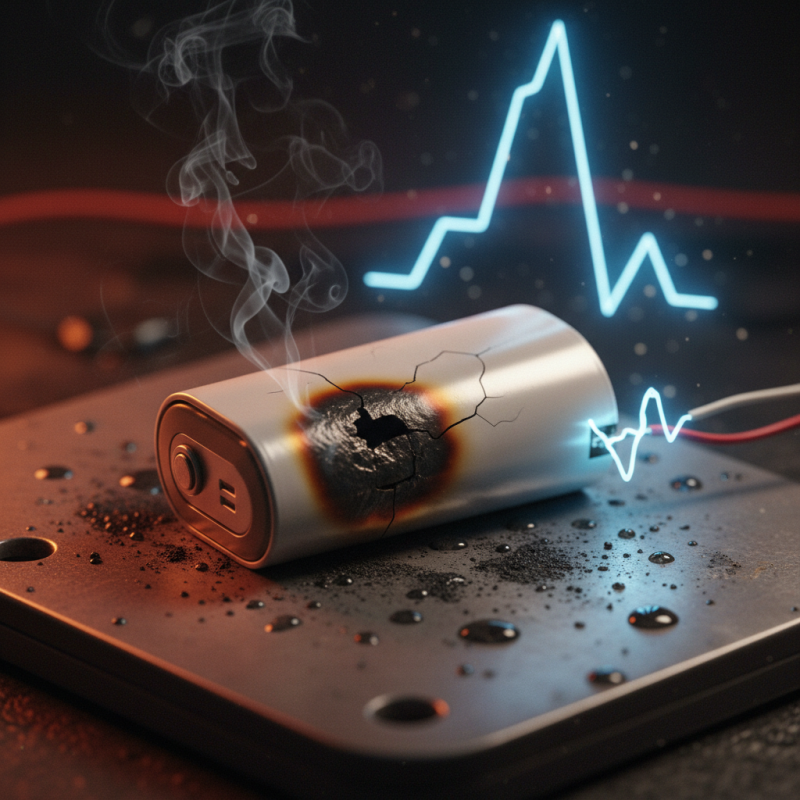
Overcharging batteries can significantly affect their lifespan and overall performance. Battery chemistry plays a critical role in this issue. Lithium-ion batteries, commonly used today, contain an electrolyte that can become unstable at high voltages. This instability leads to unwanted reactions that produce heat and gas, causing internal pressure to rise. According to a study by the Journal of Power Sources, operating at higher than optimal voltage can reduce a battery's lifespan by 30% or more, highlighting the importance of carefully managing charging practices.
Charging mechanics also contribute to the degradation of battery performance. A continuous high voltage can lead to lithium plating on the anode, which diminishes capacity. In extreme cases, this behavior can even lead to safety hazards. Research from the IEEE indicates that consistently overcharging can reduce a battery's cycle life by tens of percentage points. Understanding these dynamics is crucial for users who depend on battery-powered devices.
Tip: Always use the correct charger for your device to avoid overvoltage issues. Monitor your battery’s charge level regularly to prevent it from reaching 100% frequently. Another tip is to unplug the device as soon as it’s fully charged. Additionally, you should store batteries at half charge to extend their lifespan. These small adjustments can make a significant difference in battery health.
Overcharging batteries can severely compromise their structural integrity. Li-ion batteries operate optimally within a specific voltage range. When exceeded, the electrode materials can degrade, leading to structural breakdown. According to the Department of Energy, overcharging can result in a capacity loss of nearly 30% over time.
Electrolyte decomposition occurs under excessive voltage. This process generates gas, which can cause swelling. A report from the National Renewable Energy Laboratory shows that 40% of battery failures stem from gas buildup. These failures often lead to leaks or thermal runaway, causing potential safety hazards.
Moreover, internal short circuits can emerge. These are often the result of dendrite growth, a phenomenon exacerbated by overcharging. Studies indicate that dendrites can form more readily when batteries are charged beyond their limit, increasing the risk of catastrophic failure. This highlights the importance of careful charging practices for maintaining battery health and safety.
Overcharging a battery can lead to significant detrimental effects on its capacity and performance. Research indicates that consistently charging beyond 100% can accelerate chemical reactions within the battery. This can cause expanded electrodes and higher internal temperatures, leading to rapid degradation of the battery's materials. A study from a leading battery research organization found that overcharging can reduce a lithium-ion battery's lifespan by up to 30%.
Temperature also plays a critical role in battery health. When a battery is overcharged, it generates additional heat. This heat can lead to a phenomenon called thermal runaway, which further reduces battery efficiency. According to a report from Battery University, batteries charged at elevated temperatures may lose up to 40% of their capacity within just one year. Furthermore, when used in high-demand applications, overcharging can cause the battery to cycle inefficiently, adversely affecting overall performance.
Users should be mindful of their charging habits. Many modern devices come equipped with systems to mitigate overcharging risks. However, reliance solely on these systems may lead to complacency. Regularly allowing batteries to discharge to 20% before charging can markedly improve longevity. Similarly, unplugging once the battery reaches full capacity can be an effective practice. Such measures can help maintain optimal battery performance over time.
| Parameter | Description | Impact of Overcharging |
|---|---|---|
| Battery Capacity | The total amount of energy a battery can store. | Decreases over time due to chemical breakdown. |
| Rate of Degradation | The speed at which battery capacity declines. | Accelerated with each overcharge cycle. |
| Thermal Runaway | A condition where increased temperature causes further heating. | Can lead to battery failure and safety hazards. |
| Cycle Life | The number of complete charge and discharge cycles a battery can undergo. | Significantly reduced due to overcharging stress. |
| Internal Resistance | The opposition to current flow within the battery. | Increases, leading to heat generation and inefficiency. |
Overcharging is a significant issue that affects battery lifespan and performance. Studies indicate that consistently charging batteries beyond their recommended voltage can lead to accelerated degradation. Research from the Battery University shows that excessive charging can increase thermal activity within batteries. This heat can weaken the internal structures, leading to a reduced cycle life.
An analysis published by the Journal of Power Sources suggests that lithium-ion batteries, often used in consumer electronics, can lose up to 20% of their capacity after just 500 charging cycles when overcharged. This loss compounds over time. Continuous overcharging can also create lithium plating on the anode, reducing overall performance.
Additionally, overcharging results in chemical reactions that produce harmful byproducts. These byproducts can further degrade battery components. A study from the International Journal of Energy Research shows that even small overcharges can lead to significant long-term damage. These insights highlight the importance of adhering to manufacturer guidelines for optimal battery use.
Overcharging can severely impact battery lifespan and performance. When a battery is charged beyond its capacity, it generates excess heat. This heat can damage internal components, leading to decreased efficiency. Moreover, overcharging can cause battery swelling and leakage, which further compromises safety and functionality.
To preserve battery health, it’s essential to adopt best charging practices. Avoid charging your device overnight or when you are not present. Instead, charge it during the day when you can monitor the process. Aim to keep your battery level between 20% and 80%. This range is optimal for longevity. Consider using chargers with built-in safeguards to prevent overcharging.
The environment also plays a crucial role. Keep your devices in cool places while charging. High temperatures can accelerate degradation. Regularly review your charging habits. Are you letting your device stay plugged in too long? Reflecting on these choices can help improve battery performance. A few small adjustments can lead to significant gains over time.
: Overcharging can significantly affect battery lifespan and performance, causing heat and instability.
Lithium-ion batteries can become unstable at high voltages, leading to heat and gas production.
Yes, overcharging can lead to swelling and leaks, creating potential safety hazards.
Li-ion batteries operate optimally within a specific voltage range. Exceeding it can degrade materials.
Use the correct charger and unplug your device once it's fully charged. Monitor charge levels regularly.
Keeping your battery level between 20% and 80% is best for longevity and performance.
Signs include swelling, leakage, and reduced efficiency in battery performance over time.
Regularly reviewing your habits helps identify issues that may negatively impact battery health.
Store batteries at half charge to extend their lifespan and maintain performance.
Yes, charging in cool places helps prevent accelerated degradation due to high temperatures.
Overcharging is a prevalent issue that can significantly affect battery lifespan and performance. Understanding battery chemistry and charging mechanics is crucial to grasp why is overcharging bad for batteries. When a battery is overcharged, it can lead to structural damage due to excessive heat and pressure within the cell, which compromises its integrity. This structural failure not only reduces the battery’s capacity but also negatively impacts its overall performance, leading to shorter usage times and inefficient energy delivery.
The long-term consequences of overcharging are severe, as it can considerably diminish battery lifespan, resulting in the need for more frequent replacements. To preserve battery health, it is essential to adopt best practices for charging, such as using appropriate chargers and avoiding prolonged exposure to high voltages. By understanding these factors, users can better protect their batteries and ensure optimal functionality over time.
SK Battery