In today's fast-paced world, having a reliable battery is essential. Research shows that over 30% of smartphone users experience battery issues annually. This statistic highlights the importance of understanding how to fix a weak battery at home. A simple solution can save you time and money, making it a vital skill for everyone.
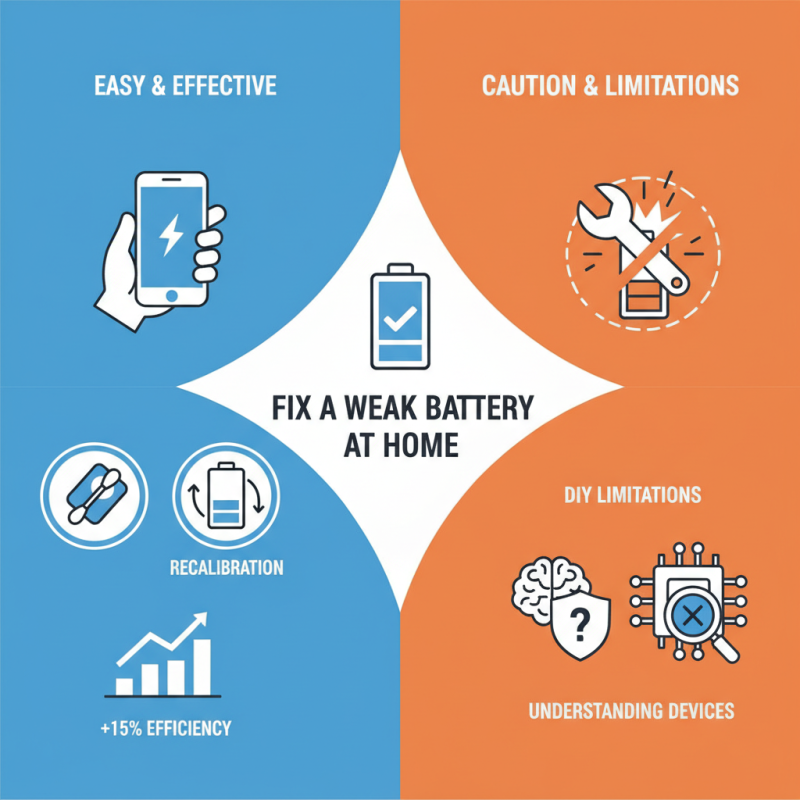
Knowing how to fix a weak battery at home can be useful. Common household problems like poor battery performance can often be addressed without professional help. Simple techniques such as cleaning contacts and recalibrating can yield positive results. According to experts, a clean battery contact can improve efficiency by up to 15%.
Addressing battery issues at home does require some caution. While many fixes are straightforward, it's important to stay informed. There are limitations to DIY methods, and improper handling can lead to further problems. This journey of learning about your battery can be rewarding but also reflective. It encourages you to better understand your devices and their upkeep.
Battery weakness can stem from various causes. Over time, chemical reactions in batteries degrade their performance. Frequent deep discharges can lead to irreversible damage. Many people do not realize that environmental factors play a significant role in battery health. Excessive heat or extreme cold can accelerate wear.
Indicators of a weak battery are usually apparent. A device may take longer to charge or fail to hold a charge adequately. In a survey by the Battery University, of over 1,000 respondents, 40% reported that their devices seemed sluggish due to battery issues. Other signs include physical swelling or leakage. These are critical red flags that necessitate immediate attention.
Understanding these factors is vital for battery maintenance. Regular checks can prevent sudden failures. Learning to interpret the signs early can save time and money. The average lifespan of a battery varies, but operating under optimal conditions is essential for longevity. Awareness is key. In many cases, minor issues can escalate into significant problems.
Diagnosing battery issues at home requires essential tools and knowledge. A multimeter is invaluable for measuring voltage. It can help you determine if your battery holds a charge. Research indicates that nearly 30% of battery failures stem from corrosion on terminals. A simple visual inspection can reveal much. Make sure you wear gloves to avoid skin irritation and ensure safety.
Having a hydrometer is another smart investment. It measures the specific gravity of the electrolyte solution in lead-acid batteries. A lower specific gravity might indicate that your battery has a low state of charge. Reports show that batteries with specific gravities below 1.250 can often fail. Additionally, a load tester can simulate average demand to see if your battery is still viable. Performance under load is a clear indicator of battery health.
Sometimes, cleaning tools like baking soda and a brush can work wonders. Corroded terminals may lead to weak connections. It’s a reminder that even minor neglect can cause major problems later. Reflect on your battery maintenance practices. A few simple tools and proactive behaviors can extend battery life significantly. It is not just about fixing the issue, but preventing future ones.
Reviving a weak battery at home can seem challenging. However, with the right approach, it becomes manageable. Many people report battery issues due to sulfation—a common problem leading to reduced capacity. According to industry studies, around 30% of batteries fail due to these deposits. Regular maintenance can help.
One effective method to address a weak battery is using a simple Epsom salt solution. Mix one tablespoon of Epsom salt with distilled water. Pour this mixture into the battery cells, after ensuring the battery is disconnected. This can help dissolve sulfation buildup. Always wear protective gear during this process.
Another option is to ensure battery terminals are clean. Corrosion can inhibit performance. Use a mixture of baking soda and water for cleaning. Applying this paste can enhance conductivity. Remember, while these methods can revive a battery, success isn't guaranteed. Regular monitoring of battery health is crucial. Keeping a close eye on voltage levels can prevent sudden failures.
Extending the life of your battery can save you time and money. Regular maintenance is key to longevity. Keep your batteries clean and free from corrosion. Use a toothbrush to scrub away any residue on the terminals. Corrosion can hinder performance and reduce battery life.
Temperature plays a vital role in battery health. Store batteries in a cool and dry place. Avoid exposing them to extreme heat or cold. Both conditions can damage the internal components. Additionally, check for any signs of swelling or leaks. These issues indicate that your battery might need replacement.
Recharging practices are also essential for longevity. Never let your battery drain completely before recharging. Aim to recharge when it reaches about 20% capacity. This can help maintain optimal performance. Lastly, consider using a smart charger. It prevents overcharging and can prolong battery lifespan significantly. Take these steps to safeguard your batteries effectively.
| Maintenance Tip | Description | Frequency |
|---|---|---|
| Regular Cleaning | Remove dirt and corrosion from battery terminals to ensure proper connection. | Every 3 months |
| Proper Charging | Avoid overcharging; unplug when charged to prevent battery damage. | Ongoing |
| Temperature Control | Keep batteries in a cool, dry place to avoid heat damage. | Ongoing |
| Cycle the Battery | Regularly discharge and recharge to improve lifespan. | Monthly |
| Check Voltage | Use a multimeter to ensure battery voltage is within optimal range. | Every few months |
When it comes to dealing with battery problems, knowing when to seek professional help is crucial. According to reports, nearly 30% of all vehicle breakdowns are linked to battery failures. This statistic underscores how vital a reliable battery is for both cars and electronic devices. Do-it-yourself solutions might work in some cases. However, if your battery consistently discharges rapidly or fails to hold a charge, a deeper issue may be at play.
Signs like swelling, leaking, or unusual odors from the battery are red flags. These warning signs should never be ignored. Industry experts recommend that if you encounter such issues, it’s best to consult a professional. They can perform diagnostic tests to identify underlying problems. A study revealed that ignoring these warning signs can lead to battery failure, resulting in costly repairs or replacements. Professional evaluation ensures your safety and prevents further damage.
Many people underestimate the complexity of modern batteries. They are not just simple power sources; they involve intricate chemical processes. A less than 50% capacity reading during tests might signal significant degradation. In such cases, consider reaching out to certified technicians. Their expertise can help you restore functionality effectively.
: Battery weakness can occur due to chemical reactions over time. Frequent deep discharges also contribute to performance degradation.
Signs include longer charging times, failure to hold a charge, and physical issues like swelling or leakage.
Excessive heat and extreme cold can speed up battery wear. It's important to store batteries in suitable conditions.
A multimeter, hydrometer, and load tester are helpful. They provide crucial information about battery voltage and performance.
Use baking soda and a brush. Cleaning can greatly improve connections and prevent further problems.
Batteries should be kept in a cool and dry place. Avoid exposing them to extreme temperatures to maintain health.
Aim to recharge when your battery reaches about 20% capacity. This practice helps maintain optimal performance.
Regular checks and cleaning can avoid sudden failures. Proactive behavior can extend battery life significantly.
These are critical indicators of a failing battery. Immediate attention is required to avoid risks.
A smart charger prevents overcharging. This can prolong the lifespan of your battery significantly.
In the article titled "How to Fix a Weak Battery at Home Easily and Effectively," readers are introduced to the fundamental aspects of battery weakness, including its causes and indicators. Understanding why a battery may weaken is crucial for effective troubleshooting. The article also outlines essential tools needed for diagnosing battery issues right at home.
An in-depth, step-by-step guide is provided for reviving a weak battery, making the process accessible for homeowners. Furthermore, it offers effective maintenance tips aimed at extending battery life, ensuring longevity and reliability. Finally, the article emphasizes when it may be necessary to seek professional help for persistent battery problems. Overall, this comprehensive guide serves as a valuable resource for anyone wondering how to fix a weak battery at home.

SK Battery