China Best Damaged Battery Safety Risks Explained?

Time:2026-10-20 Author:Liam
0%

Damaged batteries can turn an ordinary device into a serious fire and health hazard. So, What safety risks come with damaged batteries? The answer includes internal short circuits, rapid heating, toxic smoke, electrolyte leakage, and thermal runaway. A dented cell may look harmless, yet its separator could already be torn. A warm phone, swollen power bank, or hissing scooter battery needs immediate attention.

The U.S. Consumer Product Safety Commission links lithium-ion battery incidents to fires, injuries, and deaths, especially in micromobility products. New York City’s Fire Department reported 268 lithium-ion battery fires, 150 injuries, and 18 deaths in 2023. These figures describe reported incidents, not every failure. That limitation matters. Minor overheating events may never reach official databases.

Battery-safety expert Professor Paul Christensen of Newcastle University explains the danger plainly: “Lithium-ion batteries are very safe, but when they fail they can be very dangerous” (The Guardian, 2023). His observation reflects a central engineering issue: damage can remain hidden until charging, vibration, or heat triggers failure. The U.S. Environmental Protection Agency also warns that damaged lithium-ion batteries can ignite during storage, transport, or recycling.

Practical experience adds an uncomfortable detail. A battery may smell sweet, feel unusually hot, or develop a soft bulge before flames appear. Do not charge it again. Do not puncture it. Move people away and contact qualified local emergency or waste professionals. The safest response is sometimes inconvenient, costly, and slower than expected. That is precisely why damaged-battery decisions should rely on manufacturer guidance, certified technicians, and current safety data rather than visual inspection alone.
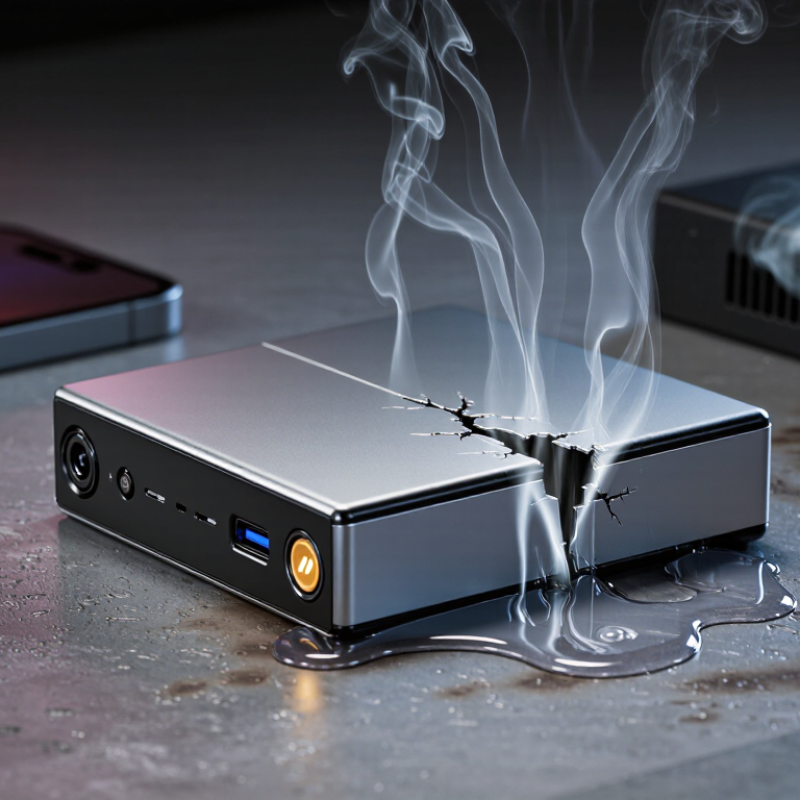
China Best Damaged Battery Safety Risks Explained?

What Counts as a Damaged Battery in China?

In China, a battery counts as damaged when its physical condition, electrical behavior, or safety protection has changed.

Visible swelling, cracks, punctures, leakage, exposed terminals, or a crushed casing are clear warning signs. A strong chemical smell, unusual heat, sudden voltage loss, or water entry also matters. A light surface scratch may be cosmetic, but a deep dent near cells deserves caution. Small damage can hide internal defects.

China’s GB 38031-2020 standard requires power-battery systems to undergo safety tests, including thermal-propagation evaluation. However, the standard is not a simple consumer inspection checklist.

The IEA’s Global EV Outlook 2024 reported that China represented about 60% of global electric-car sales in 2023. This scale increases the importance of consistent battery screening.

In practice, workshops should record impact history, charging behavior, temperature changes, and diagnostic results. Visual inspection alone is imperfect. It can miss internal separator damage.

Tips: Do not charge a swollen, leaking, wet, or hot battery.

Keep it away from buildings and combustible materials. Photograph the damage, isolate the unit, and ask a qualified technician for testing.

Do not press, open, bend, or repair the casing yourself. A battery that looks normal may still be unsafe after a hard crash.

Why Damaged Batteries Become a Safety Hazard

Why Damaged Batteries Become a Safety Hazard

A damaged battery can look harmless. Inside, however, crushed cells may contain hidden electrical faults. A torn pouch, bent casing, or loose connector can create an internal short circuit. Heat then rises quickly, sometimes without visible smoke. This is thermal runaway. It can release flammable gases and ignite nearby materials. The risk increases after drops, swelling, water exposure, or careless repairs. New York City Fire Department data recorded 268 lithium-ion battery fires and 18 deaths in 2023. These figures show that battery hazards are not only laboratory concerns. They affect homes, workshops, and charging areas.

Tips: Stop using any battery that is swollen, cracked, leaking, unusually hot, or producing a chemical smell. Do not press, puncture, open, or tape over it. Move away from combustible materials only if this can be done safely. Avoid charging a damaged unit, even briefly. Place it where children and pets cannot reach it, then contact a qualified recycling or hazardous-waste service. Do not put it in household trash. The U.S. Consumer Product Safety Commission repeatedly warns that improper charging and damaged lithium-ion batteries can cause fires. A visual inspection is not enough; internal damage may remain invisible. That limitation deserves more attention. Safety guidance can sound overly cautious, but one mistake may turn a small battery into a room fire.

Why Damaged Batteries Become a Safety Hazard

Reported lithium-ion battery fires in New York City increased from 44 in 2020 to 268 in 2023. Physical damage, punctures, crushing, overheating, and internal short circuits can trigger thermal runaway, producing intense heat, flames, and hazardous gases.

Data source: New York City Fire Department publicly reported lithium-ion battery fire totals. The figures cover all reported lithium-ion battery fire causes and are not limited to damaged batteries.

How to Identify Warning Signs of Battery Damage

China Best Damaged Battery Safety Risks Explained?

How to Identify Warning Signs of Battery Damage

In practical battery inspections, physical changes often reveal trouble before failure occurs. Check the case under bright light. Look for swelling, cracks, dents, leaking fluid, or a lifted cover. A battery should sit flat and feel firm. If it rocks on a table, stop using it.

Unusual heat is another warning sign. A slightly warm battery may be normal during operation. However, intense heat, a sharp chemical smell, smoke, or hissing requires immediate caution. Move away from the device and keep people clear. Do not press, puncture, squeeze, or open the battery. Small warning signs matter.

Performance can also change. Sudden shutdowns, rapid power loss, slow charging, or repeated charging interruptions deserve attention. A damaged battery may look normal from outside. That is easy to miss. I have seen users blame the charger first, although the battery showed earlier symptoms. That assumption is not always correct. Record when the problem appears, then ask a qualified technician to inspect it. Do not continue charging while asleep or away. Keep damaged batteries away from heat, moisture, metal objects, and children until proper handling is arranged. Disposal requirements vary by location, so follow local official guidance rather than placing one in ordinary household waste.

China’s Rules for Handling and Transporting Damaged Batteries

China Best Damaged Battery Safety Risks Explained?

China’s Rules for Handling and Transporting Damaged Batteries

In China, a damaged battery must be treated as a potential dangerous good, not ordinary recyclable material. Warning signs include swelling, cracks, leaking electrolyte, unusual heat, smoke, or a sharp chemical smell. Stop using it. Move people away. Only trained personnel should inspect it. Workers should record the battery type, condition, quantity, and incident time. They should isolate it from metal objects and other batteries, using suitable nonconductive packaging. A damaged cell should not be compressed, dropped, or placed in a sealed container without professional assessment. This point is easy to misunderstand.

For road transport within China, the shipper must confirm the battery’s classification, packaging method, labels, documents, and carrier qualifications. Requirements can change with chemistry, damage level, destination, and transport mode. A normal carton is rarely enough. Packaging may need cushioning, terminal protection, leak control, and separation between units. The vehicle and driver may also need dangerous-goods qualifications and emergency procedures. Before dispatch, check current Chinese dangerous-goods transport rules and applicable national standards. Air transport is stricter, and many damaged lithium batteries require refusal or special approval. Do not hide damage to pass inspection. In practice, paperwork is often the weak point. One missing photograph or unclear label can delay safe handling.

China Best Damaged Battery Safety Risks Explained? - China’s Rules for Handling and Transporting Damaged Batteries

Safety Dimension China-Aligned Requirement or Practice Main Risk Recommended Control and Records
Battery identification Identify the chemistry, watt-hour rating or lithium content, state of charge, number of cells, battery condition, and whether the battery is installed in equipment. Lithium-ion batteries are generally associated with UN 3480 or UN 3481; lithium-metal batteries are generally associated with UN 3090 or UN 3091. Incorrect classification can result in unsuitable packaging, labeling, documentation, or transport arrangements. Keep photographs, specifications, test information, quantity, weight, and condition records. Obtain a dangerous-goods assessment when classification is uncertain.
Definition of damaged or defective Treat batteries as damaged or defective when they show swelling, leakage, deformation, fire or heat exposure, cracked casing, corrosion, abnormal odor, electrical shorting, overheating, or evidence of internal or external damage. A battery may enter thermal runaway even when it appears inactive or has a low measured voltage. Use a documented inspection checklist. Do not charge, discharge, open, puncture, crush, or repair a damaged battery unless the activity is performed under an approved specialist procedure.
Immediate isolation Separate damaged batteries from sound batteries, ignition sources, combustible materials, occupied areas, and normal inventory. Follow the site emergency plan and local fire-safety requirements. Short circuits, heat transfer, and propagation can cause fire or release irritating and toxic gases. Use a controlled quarantine area with restricted access, ventilation, fire detection, suitable extinguishing equipment, and incident signage. Record the isolation time and condition.
Terminal protection Prevent contact between terminals and conductive materials. Remove loose metal objects and protect exposed terminals with non-conductive caps, tape, or individually fitted inner packaging. External short circuits can produce rapid heating, ignition, or thermal runaway. Inspect terminal protection before packing and after handling. Do not rely on a plastic bag alone where terminals can contact one another.
Packaging of damaged batteries Packaging must prevent movement, short circuit, leakage, and further damage. Damaged or defective lithium batteries normally require stronger, impact-resistant packaging and additional controls determined by the competent carrier or transport mode. Weak packaging may allow crushing, terminal contact, electrolyte leakage, or fire to spread during loading and transport. Use compatible inner packaging, cushioning, rigid outer packaging, and absorbent or non-combustible material where appropriate. Do not seal a visibly venting battery in an airtight container unless a qualified emergency procedure specifically requires it.
State of charge and electrical condition State-of-charge limits and packing instructions depend on the battery type, transport mode, and applicable dangerous-goods rules. Damaged batteries must not be assumed to qualify for ordinary lithium-battery exemptions. A damaged battery can retain significant energy and may become unstable during attempted discharge. Do not deliberately discharge, short, or modify the battery without a competent technical procedure. Record the measured condition and the person responsible for the assessment.
Road transport within China Road movements classified as dangerous-goods transport should follow the applicable Chinese dangerous-goods transport framework, including the Dangerous Goods List and relevant road-transport standards such as JT/T 617. Use a properly qualified dangerous-goods carrier and suitable vehicle. Unqualified vehicles, drivers, routes, or loading practices increase the consequences of fire, collision, and emergency delays. Verify carrier, driver, vehicle, packaging, labels, emergency information, route controls, loading method, and delivery receipt. Do not mix incompatible dangerous goods.
Air transport Damaged, defective, or recalled lithium batteries may be prohibited or subject to special approval and packaging requirements for air carriage. Confirm the current CAAC requirements, applicable dangerous-goods regulations, and the airline’s acceptance policy before booking. A fire in an aircraft cargo compartment presents a severe safety risk and may not be accepted under normal lithium-battery provisions. Obtain written acceptance from the airline or dangerous-goods operator. Never send a damaged battery through ordinary passenger baggage, postal, or express channels without confirmation.
Labeling and transport documents The package and documents must reflect the correct UN number, proper shipping description, hazard classification, quantity, packaging details, and emergency information required by the selected transport mode. Missing or inaccurate information can prevent responders from selecting the correct firefighting and containment measures. Use current labels and marks required by the applicable rules. Keep the safety data, shipping declaration where required, inspection record, and emergency contact information accessible.
Loading and vehicle controls Secure packages against movement, protect them from impact and weather, keep them away from heat sources, and follow dangerous-goods segregation and loading requirements. Vibration, impact, heat, and package movement can worsen internal damage or initiate a short circuit. Complete a pre-loading inspection. Do not load packages that are hot, leaking, smoking, venting, or visibly unstable; escalate them to emergency personnel or a qualified specialist.
Storage and temporary holding Store damaged batteries in a designated, supervised area consistent with Chinese fire-safety and hazardous-chemical storage requirements. Keep them separated from incompatible materials and ordinary waste streams. Uncontrolled accumulation can allow one failed battery to ignite nearby batteries and combustible materials. Set limits for quantity and duration, maintain clear access for emergency response, inspect for heat or swelling, and keep an inventory and daily condition log.
Fire, smoke, or thermal runaway Stop handling, evacuate the immediate area, isolate the hazard if it can be done safely, call the local emergency number, and provide responders with the battery type and quantity. Thermal runaway can produce intense heat, projectiles, smoke, and flammable or toxic gases; re-ignition is possible. Only trained responders should attempt suppression or cooling. Do not touch, move, or repackage a battery that is smoking, hissing, rapidly swelling, or emitting strong odor.
Recycling and disposal Do not place lithium batteries in general waste or ordinary recycling bins. Transfer them through an authorized waste or recycling channel capable of accepting damaged batteries and managing dangerous goods. Compaction, shredding, or informal dismantling can trigger fires and expose workers to electrolyte and combustion products. Maintain transfer records, packaging information, quantity, receiving-party details, and evidence of compliant treatment or recycling.
Training and accountability Personnel who classify, pack, load, document, or transport dangerous goods should receive role-appropriate training and follow written operating procedures. Untrained handling is a common cause of dropped batteries, terminal shorting, incorrect declarations, and unsafe transport. Keep training records, competency checks, incident reports, corrective actions, and periodic reviews of applicable Chinese and transport-mode requirements.

Regulatory note: Requirements may vary according to battery chemistry, capacity, condition, quantity, packaging, and transport mode. The applicable Chinese dangerous-goods rules, current transport standards, competent authorities, qualified carriers, and carrier acceptance procedures should be verified before shipment.

Safe Storage, Disposal, and Emergency Response Procedures

China Best Damaged Battery Safety Risks Explained?

Safe Storage, Disposal, and Emergency Response Procedures

A damaged battery may show swelling, cracks, leaking fluid, heat, or a sharp chemical smell. Stop using it immediately. Do not charge, puncture, squeeze, or open the casing. A battery can look quiet while remaining electrically unstable. That detail is easy to underestimate.

Place the battery away from paper, fabric, fuel, and direct sunlight. If it is cool, dry, and safe to handle, isolate it on a nonconductive surface, such as a ceramic tray. Keep children and pets away. Do not store damaged batteries in drawers, metal boxes, or sealed plastic bags. Ventilation matters. So does distance.

If the battery becomes hot, swells quickly, hisses, smokes, or produces flames, leave the area. Avoid breathing the smoke. Close the door only if it requires no risk, then contact local emergency services. Never carry a burning battery outside. Water and household extinguishers may not control the hazard safely without proper training.

For disposal, never place a damaged battery in household trash or ordinary recycling. Contact the local hazardous-waste service before transport. Explain the damage clearly. Follow its packaging and drop-off instructions. Do not improvise with tape or containers. No checklist is perfect; when the battery’s condition is uncertain, distance and professional guidance are safer choices.

FAQS

Why can a damaged battery become dangerous?

Crushed cells may develop hidden electrical faults. A torn pouch or bent casing can cause an internal short circuit. Heat can rise quickly. This process is called thermal runaway. It may release flammable gases and ignite nearby materials.

Which signs mean I should stop using a battery?

Stop using batteries that are swollen, cracked, leaking, unusually hot, smoky, or chemically scented. A loose connector also deserves attention. Do not guess.

Is a battery safe if it looks normal?

Not always. Internal damage may remain invisible after a drop or water exposure. A quick visual check can feel reassuring, but it can be wrong. That limitation needs more attention.

What should I do with a damaged battery at home?

Stop charging and using it. Keep children and pets away. Move it from combustible materials only if this is safe. Contact a qualified recycling or hazardous-waste service. Never place it in household trash.

Should I tape, open, press, or puncture the battery?

No. Do not press, puncture, open, or repair it casually. These actions can worsen internal damage. Even brief charging may create serious heat.

How should workers handle a damaged battery in China?

Treat it as potentially dangerous material, not ordinary recyclable waste. Trained personnel should inspect it. Record its type, condition, quantity, and incident time. Isolate it from metal objects and other batteries.

What packaging may be needed for road transport within China?

Requirements depend on chemistry, damage level, destination, and transport mode. Packaging may need cushioning, terminal protection, leak control, and unit separation. A normal carton is rarely enough. Check current Chinese rules before dispatch.

Can a damaged battery travel by air?

Air transport is stricter. Many damaged lithium batteries may require refusal or special approval. Do not hide damage during inspection. Confirm current requirements with qualified transport professionals.

What paperwork and transport details deserve attention?

Confirm classification, packaging, labels, documents, and carrier qualifications. Vehicles and drivers may need dangerous-goods qualifications. Emergency procedures should be ready. One missing photograph or unclear label can delay safe handling.

Conclusion

A damaged battery in China may include one that is swollen, cracked, leaking, overheated, punctured, deformed, or unable to hold charge normally. Physical impact, water exposure, corrosion, and unusual odors can also indicate internal damage. What safety risks come with damaged batteries? They may short-circuit, release harmful vapors, overheat, ignite, or enter thermal runaway, creating risks of fire, burns, toxic exposure, and property damage. Warning signs such as hissing, smoke, rapid temperature increases, discoloration, or unexpected performance changes should never be ignored.

Damaged batteries should be isolated from combustible materials and handled only with suitable protective equipment and procedures. In China, storage, transport, and disposal should follow applicable safety, environmental, and hazardous-goods requirements, including proper labeling, secure packaging, and use of qualified collection or recycling channels. Do not crush, recharge, open, or place a damaged battery in ordinary waste. If smoke, fire, or leakage occurs, evacuate the area, avoid direct contact, contact emergency services, and allow trained personnel to manage the incident.

Liam

Liam

Liam is a dedicated marketing professional with a profound expertise in the industry, where he excels at highlighting the unique advantages of our core products. With a keen understanding of market trends and consumer needs, Liam frequently updates our company’s professional blog, providing......