Effective battery management is essential for prolonged device lifespan. Many users wonder, "What temperature is best for battery life?" The truth is, battery performance hinges on various environmental factors. Every battery chemistry has an optimal operating temperature range. Deviating from this can lead to significant capacity loss over time.
A common misconception is that batteries perform well in extreme temperatures. In reality, both high and low temperatures can impair battery efficiency. Heat can accelerate chemical reactions, leading to premature aging. Conversely, cold temperatures can diminish a battery's ability to deliver power reliably. Understanding these dynamics can empower users to enhance their device's longevity.
In reviewing user experiences, the nuances of temperature effects become clear. While many seek to optimize their devices, they often overlook simple practices. Relocating devices away from heat sources is crucial. Likewise, protecting them from cold can yield visible improvements. By making small adjustments, users can experience substantial benefits in battery lifespan.
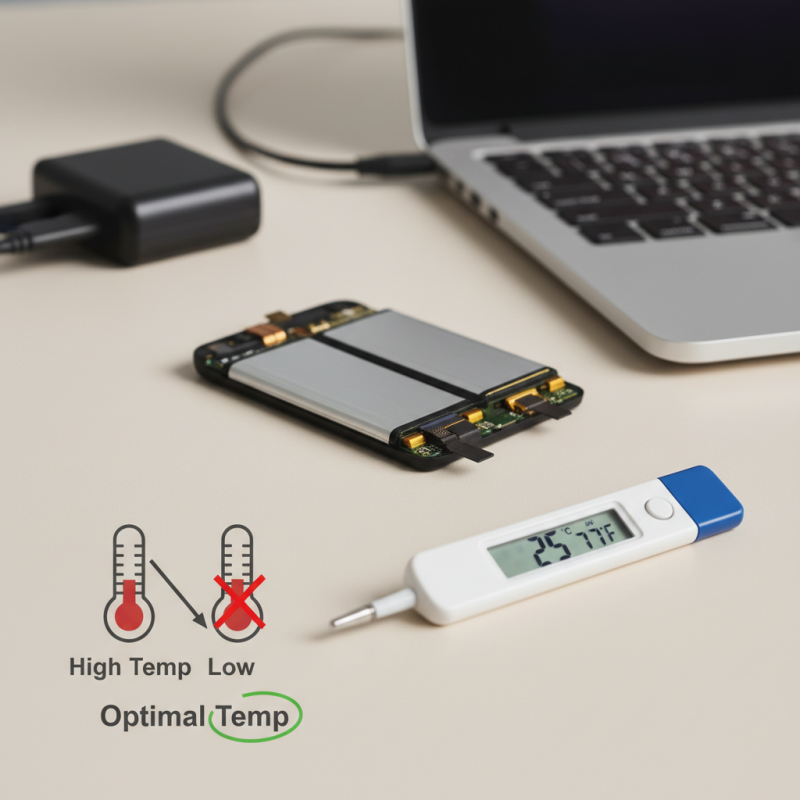
Temperature plays a significant role in battery life and performance. Batteries operate using chemical reactions, and these reactions are temperature-sensitive. In colder conditions, chemical reactions slow down, which can reduce battery capacity. Conversely, high temperatures can accelerate these reactions, leading to quicker degradation. Ideally, most batteries perform best at temperatures between 20°C to 25°C (68°F to 77°F).
To extend battery life, keep your device in a moderate environment. Avoid exposing it to extreme cold or heat. If you notice your device heating up, consider removing any cases that might retain heat. Placing your device in a cooler spot can make a difference.
Here are a few tips for optimal battery care:
- Charge your battery at room temperature, avoiding high heat sources.
- Store batteries in a cool, dry place when not in use.
- Charge devices to around 80% for optimal lifespan, rather than a full charge.
Reflecting on user behavior, many forget about temperature effects. Simple habits can lead to improved longevity. Making small adjustments can greatly enhance battery performance.
: Lithium-ion batteries perform best between 20°C and 25°C. Staying within this range is crucial for longevity.
For every 10°C increase, the battery lifespan can reduce by 50%. This highlights the importance of temperature management.
Yes, lead-acid batteries can work in temperatures from 0°C to 35°C, but very cold conditions can cause power drops.
Common indicators include swelling or leakage. Regular checks are important to ensure battery health.
Excessive heat accelerates chemical reactions, leading to quicker degradation and overall reduced performance.
Store batteries in a cool, dry place, and avoid charging outside optimal temperatures. Monitor performance seasonally.
Many overlook how ambient conditions affect devices. Adjusting habits can improve battery longevity.
Yes, prolonged high temperatures can cause irreversible damage and significantly shorten battery effectiveness.
Be vigilant about device temperature and performance. Signs like excessive heat during use should raise concerns.
No, leaving devices in a hot car can raise internal temperatures and shorten battery lifespan significantly.
The article "What Temperature Is Best for Extending Battery Life?" delves into the intricate relationship between temperature and battery performance. It begins by explaining how different battery chemistries are affected by temperature fluctuations, highlighting the optimal temperature ranges for various types of batteries. High temperatures can significantly reduce a battery's lifespan by accelerating chemical reactions that lead to degradation, while low temperatures can impair performance, causing reduced capacity and efficiency.
To maximize battery longevity, it is essential to maintain the battery within its ideal temperature range. The article emphasizes best practices for regulating battery temperatures, such as avoiding extreme heat or cold and using protective storage solutions. By understanding what temperature is best for battery life, users can effectively prolong the functionality and lifespan of their batteries, ensuring they operate efficiently for longer periods.

 SK Battery