Understanding battery types is crucial in today's tech-driven world. Different applications require different batteries, and knowing various battery types can help informed decisions. Many wonder, "What is the difference between battery types?" This question leads us to explore the significance and functionality of each type.
From alkaline to lithium-ion, the variety of batteries can be overwhelming. Each type has unique characteristics that affect performance, lifespan, and use. For example, lithium-ion batteries are known for their efficiency and energy density. However, they can be pricey and less durable under extreme conditions.
On the other hand, lead-acid batteries are often cheaper but heavier. They are reliable for power storage yet have a shorter lifespan than modern alternatives. Navigating these differences can be difficult. Diving into the specifics of battery types illuminates the choices available and empowers smarter purchasing. It's essential to weigh the pros and cons of each type, aligning them with one’s needs. Understanding these subtleties can lead to better outcomes in everyday tech usage.
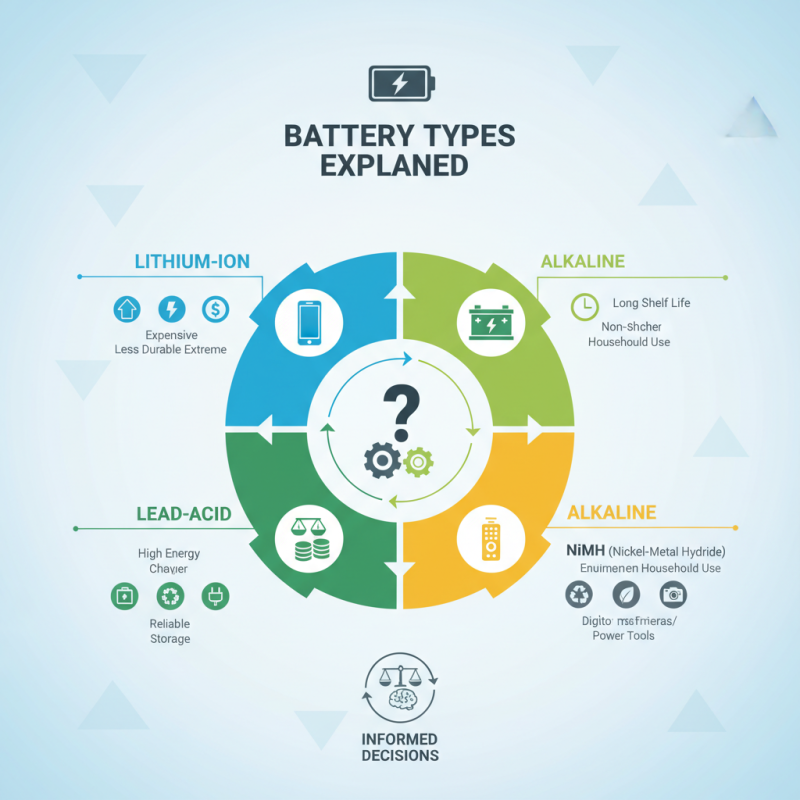
Overview of Common Battery Types in Use Today
Batteries play a crucial role in our daily lives, powering devices from smartphones to electric vehicles. The most common types include lithium-ion, lead-acid, nickel-metal hydride, and alkaline batteries. Each type has distinct characteristics and applications.
Lithium-ion batteries are widely used due to their high energy density and lightweight nature. According to a recent industry report, they account for over 70% of the rechargeable battery market. They are efficient but may pose safety risks if damaged. This highlights the need for responsible handling.
Lead-acid batteries, often found in vehicles, are reliable but heavier and less efficient than lithium-ion. They have a shorter lifespan, averaging three to five years, which can be a drawback. Nickel-metal hydride batteries, commonly used in hybrid vehicles, offer a middle ground, balancing performance and lifespan.
Tips: Always check the compatibility of the battery type with your device. Dispose of old batteries properly to avoid environmental harm. Regular maintenance can extend battery life; consider checking connections and terminals frequently. Unplug devices when fully charged to avoid prolonged stress on batteries.
Chemical Composition and Structure of Various Batteries
Batteries are crucial in our daily lives, powering everything from smartphones to electric vehicles. Their efficiency largely depends on their chemical composition. Understanding this helps us make informed choices.
Lithium-ion batteries are dominant due to their high energy density. Composed of lithium cobalt oxide and graphite, they offer a remarkable energy-to-weight ratio. Reports show that lithium-ion batteries can achieve a specific capacity of 150-200 Wh/kg, making them ideal for portable devices. However, challenges exist. Their lifespan can be compromised by thermal instability.
Nickel-metal hydride (NiMH) batteries are another option, often used in hybrid vehicles. These batteries contain nickel hydroxide and metal hydride. They produce a lower energy density of about 60-120 Wh/kg. Yet, their stability and environmental friendliness are notable advantages. Researchers highlight that NiMH batteries have a longer lifecycle, but they are less efficient than their lithium counterparts in delivering power quickly.
Lead-acid batteries remain popular for certain applications, like backup power. Composed of lead sulfate and water, they offer a lower energy density of about 30-50 Wh/kg. Despite their weight and bulkiness, they excel in cost-effectiveness. However, recycling lead-acid batteries presents environmental concerns. Ongoing research aims to improve their efficiency while addressing these environmental implications.
Comparative Analysis of Battery Performance and Lifespan
Battery performance and lifespan are critical factors when selecting a power source. Understanding the differences among types can help users make informed choices based on application needs. Lithium-ion batteries are popular for their high energy density. They can cycle through thousands of charges, maintaining capacity over time. However, they can degrade faster if exposed to extreme temperatures.
Nickel-metal hydride batteries offer another alternative. While they are less energy-dense, they are often considered safer. These batteries struggle with discharge rates and can lose a portion of their charge when not in use. Users may find themselves frustrated with reduced performance in low-drain applications.
Lead-acid batteries, known for their robustness, are often employed in automotive and backup power systems. Their lifespan is shorter compared to lithium-ion batteries. They require regular maintenance to optimize performance. Users may overlook the need for periodic checks, which can lead to reduced reliability. Making the right choice involves weighing these factors carefully against specific needs.
Applications and Suitability of Different Battery Types
When it comes to battery types, understanding their applications is crucial. Lithium-ion batteries dominate the consumer electronics sector. They suit smartphones and laptops due to their high energy density and lightweight design. Research shows that lithium-ion batteries hold 150-200 Wh/kg, making them efficient for portable devices.
Lead-acid batteries find their strength in automotive and backup power systems. Their weight is a downside, but they excel in robustness. They can deliver high current, which is essential for starting engines. According to industry reports, they have a cycle life of about 300-500 cycles, offering a reliable option for power back-up scenarios.
Tips: Consider the energy demands of your devices. For long-term storage solutions, lead-acid might be your go-to, while lithium-ion is ideal for mobility. As electric vehicles rise, other options like solid-state batteries are emerging. They promise greater safety and efficiency but are still in development phases. Balancing performance with cost is challenging, and not every battery type fits every situation.
Top Battery Types and Their Differences Explained
| Battery Type |
Chemistry |
Applications |
Energy Density (Wh/kg) |
Cycle Life (cycles) |
| Lithium-ion (Li-ion) |
Lithium Cobalt Oxide |
Smartphones, Laptops, Electric Vehicles |
150-250 |
500-1500 |
| Nickel-Metal Hydride (NiMH) |
Nickel Hydroxide and Hydrogen Absorbing Alloy |
Hybrid Vehicles, Rechargeable Batteries for Electronics |
60-120 |
500-1000 |
| Lead-Acid |
Lead (Pb) and Lead Oxide |
Automobile Batteries, Backup Power |
30-50 |
300-400 |
| Solid-State |
Various Solid Electrolytes |
Future Electric Vehicles, Wearable Technology |
250-500 |
1000-3000 |
| Lithium Polymer (LiPo) |
Lithium Cobalt Oxide or Lithium Iron Phosphate |
Drones, RC Devices, Smartphones |
150-200 |
300-500 |
Future Trends in Battery Technology and Innovations
The future of battery technology looks promising, driven by the growing demand for energy storage and electric vehicles. According to a recent report by BloombergNEF, the global battery market is expected to exceed $500 billion by 2030. This growth is propelled by advancements in materials and manufacturing techniques. Solid-state batteries are emerging as a potential alternative, offering higher energy density and improved safety. These batteries might be smaller and last longer than conventional lithium-ion cells.
However, challenges remain. Manufacturing costs for solid-state batteries are significantly higher, and scaling production presents hurdles. Furthermore, the supply chain for essential materials, like lithium and cobalt, raises sustainability concerns. The industry is exploring alternatives such as sodium-ion batteries, which could lessen dependency on scarce resources. Research indicates that this approach could lead to more environmentally friendly battery solutions.
Innovations aren't limited to chemistry. Technology integration is on the rise. Smart features in battery management systems can enhance efficiency. Enhanced monitoring may reduce risks of failure. Users can expect more reliable options in the coming years, but uncertainty prevails. Balancing performance with ecological impact remains a critical focus for engineers and researchers alike.
Top Battery Types and Their Differences
This chart compares the energy density of different battery types, illustrating advancements in battery technology and innovations aimed at enhancing performance and efficiency.
Conclusion
This article provides a comprehensive overview of the different types of batteries commonly used today, delving into their chemical composition and structural characteristics. It explains the fundamental question: "What is the difference between battery types?" by examining key performance metrics, including energy density and lifespan. A comparative analysis highlights how these factors vary across battery types, influencing their suitability for various applications, from consumer electronics to electric vehicles.
Moreover, the article discusses future trends in battery technology, emphasizing ongoing innovations that aim to enhance efficiency and sustainability. As the demand for renewable energy solutions grows, understanding the distinctions between battery types becomes increasingly crucial for consumers and industries alike. By exploring these topics, the article equips readers with the knowledge to make informed choices regarding battery usage and future investments in technology.

 SK Battery